Rental Maintenance: Complete Guide for UK Landlords
Every property owner knows that effective rental maintenance separates profitable portfolios from money pits. Yet despite its critical importance, maintenance remains one of the most challenging aspects of property management. Between emergency calls at midnight, compliance deadlines, tenant expectations, and cost control, landlords face a constant balancing act. The good news? A strategic approach to maintaining your rental properties not only protects your investment but also maximizes returns, reduces vacancy rates, and keeps tenants satisfied for longer tenancies.
Why Rental Maintenance Demands Your Strategic Attention
Maintenance isn't just about fixing what breaks. It's a strategic investment that directly impacts your bottom line and long-term property value.
Consider the numbers: research from Zillow shows that maintenance issues rank among the top reasons tenants choose not to renew leases. Every turnover costs you weeks of lost rent, cleaning expenses, and the administrative burden of finding new tenants. Meanwhile, deferred maintenance compounds exponentially. That small roof leak ignored today becomes a £15,000 structural repair tomorrow, complete with tenant displacement costs and potential legal liability.
The financial case for proactive maintenance is compelling:
- Preventive maintenance costs roughly 30-40% less than reactive emergency repairs
- Well-maintained properties command 5-15% higher rents in competitive markets
- Regular upkeep extends asset lifespan by decades, protecting capital appreciation
- Documented maintenance programs reduce insurance premiums and demonstrate duty of care
Beyond finances, maintenance drives tenant retention. When tenants know issues will be addressed promptly and professionally, they stay longer and take better care of your property. This creates a virtuous cycle that every successful landlord understands.

The Tax Treatment You Need to Understand
Smart landlords recognize that not all maintenance spending is created equal from a tax perspective. The distinction between repairs and improvements fundamentally affects your tax position.
According to IRS Publication 527, ordinary repairs that keep property in working condition are fully deductible in the year incurred. Replacing broken windows, fixing leaks, repainting rooms, and repairing appliances all qualify. However, improvements that add value, prolong useful life, or adapt property for new uses must be capitalized and depreciated over many years.
The routine maintenance safe harbor provides additional flexibility for landlords who perform regular, recurring maintenance on building systems and structural components. This allows certain preventive work to be deducted immediately rather than capitalized, but it requires consistent documentation and systematic scheduling.
Keep meticulous records of every maintenance expense:
- Date of service and description of work performed
- Before and after photos when relevant
- Invoices from contractors with itemized labor and materials
- Whether work was emergency reactive or scheduled preventive
- Which property and unit the expense applies to
This documentation protects you during audits and ensures you claim every legitimate deduction while staying compliant with HMRC guidelines.
Building Your Preventive Maintenance Framework
Reactive maintenance means you're always fighting fires. Preventive maintenance means you control when, where, and how much you spend.
The Institute of Real Estate Management (IREM) recommends establishing inspection cadences based on property age, occupancy type, and system criticality. For most rental properties, quarterly visual inspections catch emerging issues before they escalate, while annual deep inspections cover everything from roof condition to foundation integrity.
Seasonal Maintenance Priorities
Different seasons demand different attention. Structure your preventive program around the UK climate calendar.
| Season | Critical Maintenance Tasks | Why It Matters |
|---|---|---|
| Spring | Roof inspection, gutters cleared, HVAC servicing | Catch winter damage; prepare cooling systems |
| Summer | Exterior painting, window seals, drainage checks | Optimal weather for outdoor work; prepare for autumn rains |
| Autumn | Heating system service, chimney sweep, weatherproofing | Prepare for heating season; prevent cold-weather failures |
| Winter | Pipe insulation checks, emergency contact updates | Prevent freeze damage; ensure rapid response capability |
Each season also presents opportunities for cost savings. Contractors often offer better rates during their slower periods, so scheduling non-urgent exterior work in winter or HVAC maintenance in spring can reduce your costs significantly.
Creating Your Preventive Maintenance Checklist
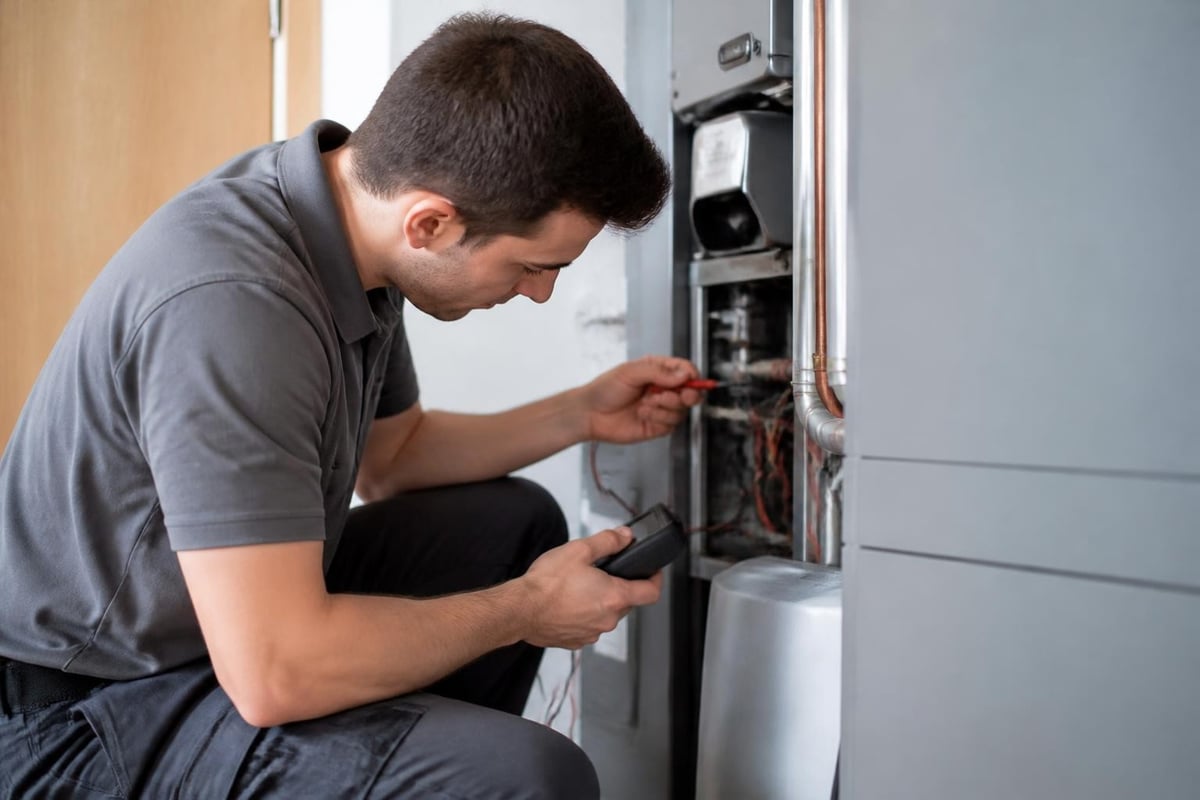
A comprehensive checklist ensures nothing falls through the cracks. Organize by property system and assign each item a frequency.
HVAC and Climate Control:
- Filter replacement (monthly during use)
- Professional service and efficiency testing (annually)
- Duct inspection and cleaning (every 3-5 years)
- Thermostat calibration and programming review (semi-annually)
Plumbing and Water Systems:
- Leak inspections at fixtures and under sinks (quarterly)
- Water heater flush and pressure relief valve test (annually)
- Main shut-off valve operation test (annually)
- Following EPA WaterSense guidance for efficiency and leak prevention
Electrical Systems:
- GFCI and breaker testing (semi-annually)
- Smoke and CO detector testing per NFPA standards (monthly)
- Light fixture and switch inspection (quarterly)
- Professional electrical inspection (every 5 years or at tenant turnover)
Structural and Exterior:
- Roof condition, flashing, and penetrations (annually)
- Foundation cracks and drainage patterns (annually)
- Exterior paint, caulking, and weather seals (annually)
- Window and door operation and weatherstripping (semi-annually)
The best landlords maintain digital records of every inspection, creating a timeline that proves proper care and helps predict when systems will need replacement.
Managing Tenant-Reported Maintenance Efficiently
Even with excellent preventive maintenance, tenants will report issues. Your response system determines whether these become relationship-building opportunities or legal liabilities.
Speed matters enormously. Tenants measuring their experience by how quickly you respond to their first request, not just by final resolution. Acknowledge every maintenance request within 24 hours, even if the actual repair will take longer. This simple communication step prevents the frustration that leads to withholding rent or breaking leases.
Categorizing and Prioritizing Requests
Not all maintenance requests deserve equal urgency. Create a clear triage system that everyone understands.
- Emergency (0-4 hours): No heat in winter, major leaks, gas smells, electrical hazards, security breaches, no water
- Urgent (24-48 hours): Appliance failures, minor leaks, toilet issues, heating/cooling problems in moderate weather
- Standard (3-7 days): Dripping taps, cosmetic damage, non-essential appliance repairs, window screen tears
- Scheduled (next maintenance cycle): Minor paint touch-ups, squeaky hinges, routine wear items
Communicate these categories to tenants during move-in so expectations are set from day one. When a tenant reports a dripping tap as an "emergency," you can educate them on your classification system while still addressing their concern promptly.
Your maintenance request process should include:
- Multiple reporting channels (phone, email, tenant portal)
- Automatic acknowledgment with ticket number and expected response time
- Regular status updates for requests taking more than 48 hours
- Post-completion follow-up to ensure satisfaction
- Documentation of all communications for legal protection
This systematic approach transforms maintenance from a chaotic burden into a professional operation that builds tenant trust.
Compliance and Safety: Non-Negotiable Maintenance
Certain maintenance tasks aren't optional. They're legal requirements that carry serious penalties for non-compliance.
In rental properties, safety compliance protects both tenants and your business. UK landlords must maintain gas safety certificates, electrical installation condition reports, energy performance certificates, and various HMO-specific requirements depending on property type and location.
Critical Compliance Maintenance Schedules
Gas safety checks must occur annually by a Gas Safe registered engineer. There's no flexibility here; this is both a legal requirement and a life-safety issue. Schedule these 10-11 months after the last inspection to maintain continuous compliance even if scheduling flexibility is needed.
Electrical installation condition reports (EICR) are required every five years for most rental properties, or at each change of occupancy. Given the devastating consequences of electrical fires, many experienced landlords inspect every three years regardless of legal minimums.
For properties built before 1978 (particularly relevant in the UK's older housing stock), lead-based paint disclosure and maintenance requirements apply whenever you disturb painted surfaces during repairs or renovations. Contractors must be properly certified, and you must provide required disclosures to tenants.
| Compliance Item | Frequency | Responsible Party | Penalty for Non-Compliance |
|---|---|---|---|
| Gas Safety Certificate | Annual | Gas Safe Engineer | Unlimited fine, 6 months prison |
| EICR | 5 years | Qualified Electrician | £30,000 fine per breach |
| EPC | At letting | Accredited Assessor | £5,000 fine |
| Smoke Alarms | Installation + monthly testing | Landlord/Tenant | £5,000 fine |
| Carbon Monoxide Alarms | Installation in fuel-burning rooms | Landlord | £5,000 fine |
Professional property management means treating compliance as your baseline, not your ceiling. The landlords who excel go beyond minimum requirements because it's both safer and ultimately more profitable.
Cost Control Without Compromising Quality
Maintenance budgets demand careful management. Overspend and you erode returns; underspend and you court disaster.
Industry benchmarks suggest budgeting 1-2% of property value annually for maintenance in newer properties, increasing to 3-4% for older buildings. However, these are averages. Your actual costs depend on property age, tenant quality, local climate, and how well previous owners maintained the property.
In-House Versus Contractor Decisions
The build-or-buy decision applies to maintenance labor. Should you develop in-house capabilities or contract everything?
In-house maintenance makes sense when:
- You manage multiple properties in close geographic proximity
- Common repairs recur frequently enough to justify dedicated staff
- You can achieve full-time utilization across your portfolio
- You have the systems to manage employees (payroll, insurance, supervision)
Contracting works better when:
- Properties are geographically dispersed
- Repairs require specialized licenses or expertise
- Volume doesn't justify full-time staff
- You want to avoid employment overhead and liability
Many successful landlords use a hybrid approach, maintaining staff for routine work and basic repairs while contracting specialized trades and after-hours emergencies. This balances cost control with flexibility.
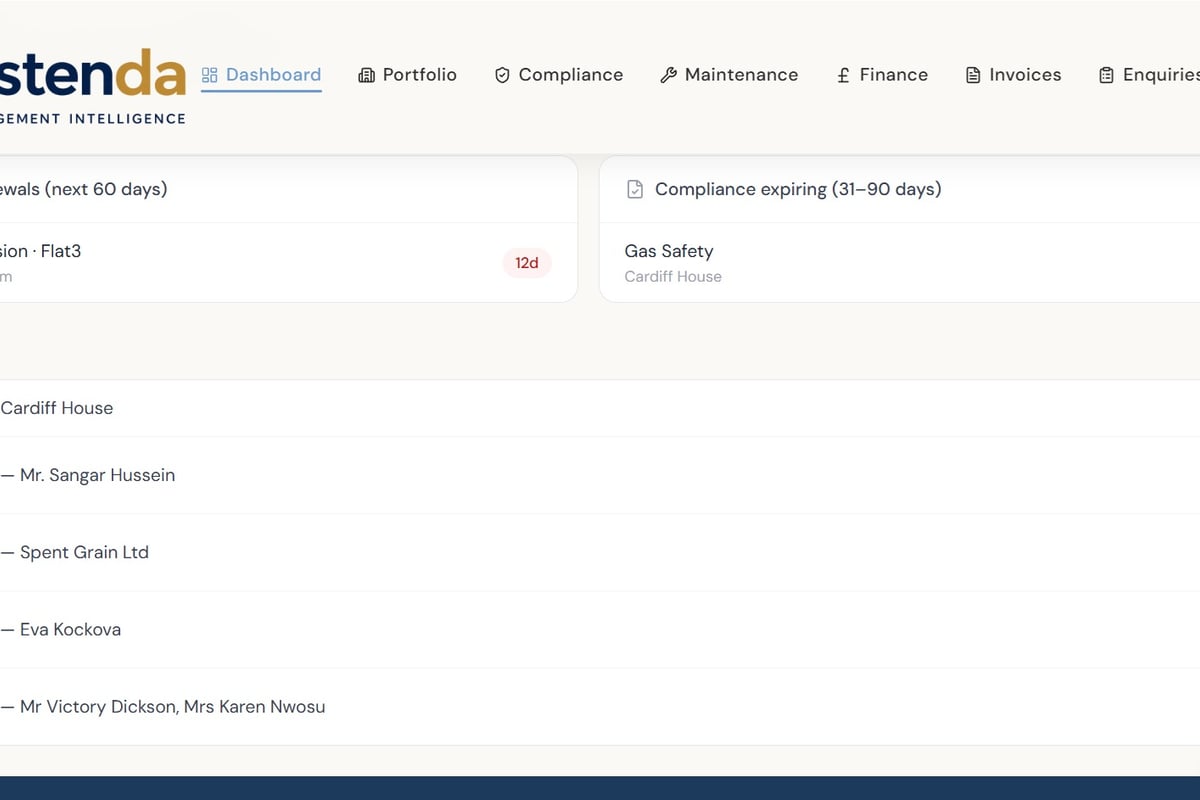
The Landlord Growth package from Astenda helps UK landlords track maintenance expenses across their entire portfolio, generating reports that show exactly where maintenance pounds are going and highlighting properties that demand disproportionate attention, enabling smarter budgeting decisions.
Leveraging Technology for Maintenance Efficiency
Modern property management demands modern tools. Digital platforms streamline everything from tenant requests to contractor scheduling to expense tracking.
Automated maintenance tracking systems eliminate the paper trails and spreadsheet chaos that plague traditional approaches. Tenants submit requests through portals or mobile apps, creating instant digital tickets with photos and timestamps. You dispatch contractors, track progress, and close loops without a single phone call or lost email.
Energy efficiency maintenance deserves special attention. Following ENERGY STAR guidelines for benchmarking and efficiency improvements, landlords can reduce operating costs while maintaining property performance. Simple upgrades like LED lighting, programmable thermostats, and low-flow fixtures pay for themselves through reduced utility costs, and in some cases, higher rents as environmentally conscious tenants seek efficient properties.

HVAC Systems: Your Largest Maintenance Investment
Climate control systems represent both your largest maintenance expense and your greatest opportunity for efficiency gains.
ASHRAE standards and guidelines provide the technical foundation for maintaining HVAC systems properly. These aren't just academic recommendations; they're proven practices that extend equipment life and reduce energy consumption.
Preventive HVAC Maintenance That Pays Back
Regular servicing prevents the majority of HVAC failures. Spring and autumn tune-ups, timed before peak heating and cooling seasons, catch problems when they're still minor and ensure systems operate at peak efficiency when tenants need them most.
Essential HVAC preventive maintenance includes:
- Coil cleaning to maintain heat transfer efficiency
- Refrigerant level checks and leak detection
- Electrical connection tightening and testing
- Condensate drain clearing to prevent water damage
- Fan motor lubrication and belt inspection
- Filter replacement on appropriate schedules
Filter replacement alone can improve efficiency by 5-15% while preventing dust accumulation that leads to expensive component failures. For a multi-property portfolio, bulk purchasing filters and scheduling regular replacement across all properties creates consistency while reducing per-unit costs.
When HVAC systems do fail, rapid response is critical. A broken heater in January isn't just uncomfortable; it's a potential habitability violation that could justify rent withholding. Maintaining relationships with 24/7 HVAC contractors and clearly communicating response protocols ensures emergencies get handled before they escalate into legal issues.
Documentation: Your Legal and Financial Protection
Every successful landlord learns this lesson: if it isn't documented, it didn't happen.
Maintenance documentation serves multiple critical functions. It proves compliance with regulations, supports tax deductions, demonstrates proper care during disputes, and helps predict future maintenance needs through historical patterns.
What to Document and How
Create a digital file for each property containing every maintenance interaction from day one. This includes:
- All preventive maintenance: Inspection reports, service records, contractor invoices, photos showing condition before and after work
- Tenant requests: Original requests, your responses, work performed, completion confirmations, tenant sign-offs when appropriate
- Compliance certifications: Gas safety certificates, EICR reports, EPC ratings, planning permissions for alterations
- Emergency responses: Time of call, nature of emergency, contractor dispatched, resolution, costs incurred
Modern platforms make this easier than ever. Instead of filing cabinets full of paper, you upload invoices and photos to cloud-based systems that organize everything automatically. When a tenant disputes their deposit claiming you never fixed the bathroom tap, you pull up the work order from 18 months ago showing repair completion and their acknowledgment.
This documentation becomes invaluable during tax time. Rather than reconstructing expenses from bank statements, you have a complete record of every maintenance pound spent, properly categorized and ready for your accountant.
Building Reliable Contractor Relationships
Your contractor network determines maintenance quality, speed, and cost. Cultivate these relationships as carefully as you select properties.
The best contractors earn premium rates because they're worth it. They show up when promised, communicate proactively, stand behind their work, and respond to emergencies reliably. These contractors become partners in your rental business, not just vendors.
Vetting and Managing Your Contractor Team
Start every new contractor relationship with proper due diligence. Verify licenses and insurance, check references from other property owners, start with small jobs before assigning critical work, and establish clear communication protocols from day one.
Your contractor agreement should specify:
- Response time expectations for different urgency levels
- Hourly rates, trip charges, and markup on materials
- Required documentation (photos, itemized invoices, warranties)
- Property access procedures and tenant communication protocols
- Payment terms and dispute resolution processes
For frequently used contractors, negotiate preferential rates in exchange for consistent volume. A plumber who knows they'll get all your properties' work will often discount rates 10-20% below their standard prices while prioritizing your calls.
Maintain backup contractors for every critical trade. When your primary electrician is unavailable and a tenant has no power, you need a reliable alternative who already knows your standards and pricing expectations.
Seasonal Challenges and Weather-Related Maintenance
The UK climate creates specific maintenance challenges that landlords must anticipate and prepare for systematically.
Winter brings burst pipes, boiler failures, and ice damage. Autumn floods expose drainage weaknesses and roof vulnerabilities. Summer heat stresses air conditioning where installed. Each season demands specific preparation.
Winter Weather Preparation
Before winter arrives, insulate exposed pipes, service heating systems, seal drafts around windows and doors, clear gutters and downspouts completely, and test emergency heating backup systems where installed.
Educate tenants on cold-weather protocols:
- Keeping heating on at minimum temperatures when away
- Opening cabinet doors during extreme cold to warm pipes
- Reporting heating issues immediately, not waiting until systems fail completely
- Understanding when to call you versus when to call emergency services
For vacant properties, winterization becomes critical. Drain water systems completely, add antifreeze to drains and toilets, set heating to minimum safe levels, and inspect regularly throughout winter.
Storm preparation means checking roof integrity, securing loose items that could become projectiles, ensuring drainage systems handle heavy rainfall, and having emergency contact information for tenants and contractors readily available.
Managing Multiple Properties at Scale
As your portfolio grows, maintenance complexity increases exponentially. What worked for two properties fails spectacularly at ten.
Scaling maintenance operations demands systems, not just hustle. Successful multi-property landlords standardize processes, leverage technology, and track performance metrics religiously.
Portfolio-Level Maintenance Strategies
Create maintenance standards that apply across all properties. When every property uses the same paint colors, fixture brands, and appliance models, you bulk purchase supplies, reduce contractor learning curves, and simplify inventory management.
Track maintenance costs per property to identify underperformers. If one property consistently demands twice the maintenance budget of comparable units, investigate whether problem tenants, deferred maintenance from previous owners, or inherent property issues explain the disparity.
Key maintenance metrics to track across your portfolio:
- Average maintenance cost per property per year
- Emergency versus preventive maintenance ratio
- Average response time by request category
- Contractor cost comparison for identical work
- Maintenance-related vacancy days
- Tenant satisfaction scores for maintenance responsiveness
These metrics reveal patterns that individual property analysis misses. Perhaps all your pre-1990 properties need plumbing upgrades. Maybe properties in a specific neighborhood share drainage issues requiring coordinated solutions.
If you're managing properties across multiple SPVs or limited companies, consolidating maintenance data becomes essential for understanding true portfolio performance. For support with tracking and optimizing your multi-property maintenance operations, contact Astenda to see how their platform handles complex portfolio structures.
Strategic rental maintenance protects your investment, satisfies tenants, ensures compliance, and maximizes returns across your entire portfolio. By implementing preventive maintenance programs, building reliable contractor relationships, leveraging technology for tracking and efficiency, and maintaining meticulous documentation, you transform maintenance from a reactive burden into a competitive advantage. Astenda helps UK landlords track maintenance expenses, monitor compliance deadlines, and view complete portfolio performance in real-time, making it easier to spot maintenance patterns and optimize spending across single-let properties, HMOs, and complex multi-SPV portfolios.
Get a live view of your whole property portfolio.
Start your 30-day free trialGeneral information only. This is not legal, tax or financial advice. Rules change and vary by council, so check GOV.UK or take professional advice.