Deposit Protection Service Prescribed Information Guide
When you take a tenancy deposit from your tenants, protecting it within an approved scheme is only half the job. The other essential requirement is serving deposit protection service prescribed information to each tenant who has paid a deposit. This legal obligation is surprisingly specific, and getting it wrong can cost you the right to recover possession and potentially trigger penalty payments. For HMO landlords managing multiple tenancies under one roof, understanding exactly what prescribed information you must provide, when to serve it, and how to do so correctly is critical to staying compliant and avoiding costly disputes.
What Is Deposit Protection Service Prescribed Information?
Deposit protection service prescribed information is the statutory set of details that landlords and agents must give to tenants when they protect a tenancy deposit. The term "prescribed information" means the specific items of information Parliament has set out in law – you cannot choose what to include or summarise the requirements in your own words.
The Housing (Tenancy Deposits) (Prescribed Information) Order 2007 lays out exactly what landlords must tell tenants. This statutory instrument applies across England and Wales and covers assured shorthold tenancies where a deposit has been taken.
Why the Law Requires Prescribed Information
Parliament introduced deposit protection and prescribed information requirements to address a long-standing imbalance between landlords and tenants. Before these rules, tenants often struggled to recover deposits at the end of a tenancy, and disputes were commonplace with no independent resolution mechanism.
The prescribed information serves several purposes:
- It confirms to the tenant that their deposit has been protected in a government-approved scheme
- It explains how the tenant can claim their deposit back at the end of the tenancy
- It sets out the steps for raising a dispute if the landlord and tenant cannot agree on deductions
- It provides transparency about who holds the deposit and how the process works
By making these details mandatory, the law ensures every tenant receives the same core information regardless of who their landlord is or which deposit scheme is used.
What Must Be Included in the Prescribed Information
The deposit protection service prescribed information you serve must contain specific details about the deposit, the landlord, the property, and the protection scheme. Missing even one item can render the prescribed information incomplete and leave you non-compliant.
According to official GOV.UK guidance, you must provide:
| Category | Required Details |
|---|---|
| Deposit amount | The exact sum paid as a deposit |
| Property address | The full address of the let property |
| Landlord details | Your name, address and contact information (or your agent's if they are handling the deposit) |
| Tenant details | Name and contact details of each tenant who paid the deposit |
| Scheme information | Which government-approved scheme protects the deposit (DPS, TDS or mydeposits) |
| Scheme contact details | The scheme's full contact information and how to access its dispute resolution service |
| Deposit holder | Whether you are using custodial or insured protection, and who physically holds the money |
| Circumstances for deductions | What the deposit may be used for at the end of the tenancy |
| Dispute procedure | How disputes will be handled if you and the tenant cannot agree on deductions |

Explaining Deductions and Disputes
Two elements of the prescribed information often cause confusion: the circumstances for deductions and the dispute resolution procedure. You do not need to list every possible deduction scenario, but the prescribed information must make clear that deposits can be used for rent arrears, damage beyond normal wear and tear, and other breaches of the tenancy agreement.
The dispute procedure explanation must tell tenants how the independent adjudication service works if you cannot reach agreement. Each of the three approved schemes – Deposit Protection Service (DPS), Tenancy Deposit Scheme (TDS), and mydeposits – offers free dispute resolution, and your prescribed information must explain how tenants can access it.
When You Must Serve Prescribed Information
Timing is just as important as content. The law sets strict deadlines for both protecting deposits and serving the deposit protection service prescribed information to your tenants.
You must protect the deposit and serve the prescribed information within 30 days of receiving the deposit money. This deadline applies whether you use custodial protection (where the scheme holds the deposit) or insured protection (where you hold the deposit with insurance backing).
The 30-Day Clock
The 30-day period starts the moment you receive cleared funds from the tenant, not when the tenancy begins. If a tenant pays their deposit before move-in day, the clock is already ticking.
For HMO landlords, this becomes particularly important when tenants move in on different dates or pay deposits at staggered times. Each tenant's prescribed information must be served within 30 days of receiving their individual deposit contribution, even if they are all signing the same tenancy agreement.
Common timing scenarios:
- Tenant pays deposit on 1st March → deadline to protect and serve prescribed information is 31st March
- Joint tenants each pay their share on different dates → separate 30-day countdown for each payment
- Replacement tenant pays deposit mid-tenancy → fresh 30-day obligation begins from that payment
Missing this deadline does not mean you can never serve the prescribed information, but it does mean you were non-compliant from day 31 onwards, with all the consequences that brings.
How to Serve Deposit Protection Service Prescribed Information
"Serving" prescribed information means delivering it to the tenant in a way you can prove if challenged later. The law does not specify a particular method, but you must ensure each tenant who paid a deposit receives their copy.
Acceptable Methods of Service
Most landlords and agents choose one of these approaches:
- Hand delivery – Give printed copies directly to tenants and ask them to sign a receipt
- First-class post – Send by Royal Mail to the tenancy address or tenant's forwarding address
- Email – Send as a PDF attachment to the tenant's email address (keep proof the email was sent and opened)
- Within the tenancy agreement – Include the prescribed information as a schedule to the signed agreement (ensure tenants receive and sign the full document)
Each deposit scheme provides template prescribed information documents that you can complete and use. mydeposits offers a comprehensive guide with templates that many landlords find helpful, as does each of the other approved schemes.

Proof of Service Matters
Whatever method you choose, keep evidence. If a tenant later claims they never received the prescribed information, you will need to prove you served it within the 30-day window. Save delivery receipts, signed acknowledgements, email confirmations, or copies of the signed tenancy agreement that includes the prescribed information as a schedule.
Consequences of Failing to Provide Prescribed Information
The penalties for not serving deposit protection service prescribed information can be severe, far exceeding the administrative hassle of getting it right in the first place. Courts take these obligations seriously because they are designed to protect tenants from unfair practices.
If you fail to provide prescribed information (or provide it late or incompletely), two main consequences arise:
Financial Penalties
A tenant can apply to the county court for an order requiring you to either return the deposit or protect it and serve the prescribed information. The court must also order you to pay the tenant a penalty. The penalty cannot be less than the original deposit amount and can be up to three times the deposit value.
This is not a discretionary fine – the court has no choice but to impose it once non-compliance is proven. Even if you later protect the deposit and serve the information, the penalty still applies if you were outside the 30-day window when the tenant applied to court.
Restrictions on Possession Proceedings
Until you have both protected the deposit and served compliant prescribed information, you cannot serve notice to recover possession of the property. This restriction applies regardless of the possession ground you intend to rely on or the tenant's conduct.
For landlords, this creates a practical problem: if you discover non-compliance months or years into a tenancy, you must fix it before you can bring the tenancy to an end through the courts, even if the tenant is in serious rent arrears or breaching the agreement in other ways.
Prescribed Information for Joint Tenancies and HMOs
HMO landlords often manage properties where multiple tenants each pay a share of a larger deposit, or where tenants hold individual agreements for separate rooms. The prescribed information requirements apply in both scenarios, but the practical steps differ.
Joint Tenancies with a Single Deposit
When several tenants sign one tenancy agreement and collectively pay one deposit, you protect that single deposit in one scheme. However, you must serve the deposit protection service prescribed information to each tenant named on the agreement.
This means if four tenants share a property under one joint tenancy:
- Protect the full deposit amount once
- Prepare prescribed information showing all four tenants' details
- Serve a copy to each of the four tenants individually within 30 days
Do not assume that giving the information to one tenant satisfies your obligation to the others. Each person who paid towards the deposit has an individual right to receive the prescribed information.
Individual Tenancies in HMOs
If your HMO tenants each have separate agreements for their own rooms, each deposit is protected separately, and each tenant receives their own prescribed information. This is more administratively intensive but makes the obligation clearer: one deposit, one set of prescribed information, one tenant.
Keeping track of multiple deposits, protection dates, and prescribed information deadlines can become complex in larger HMOs. Many landlords use rent roll software or property management systems to monitor compliance dates and ensure nothing is missed.
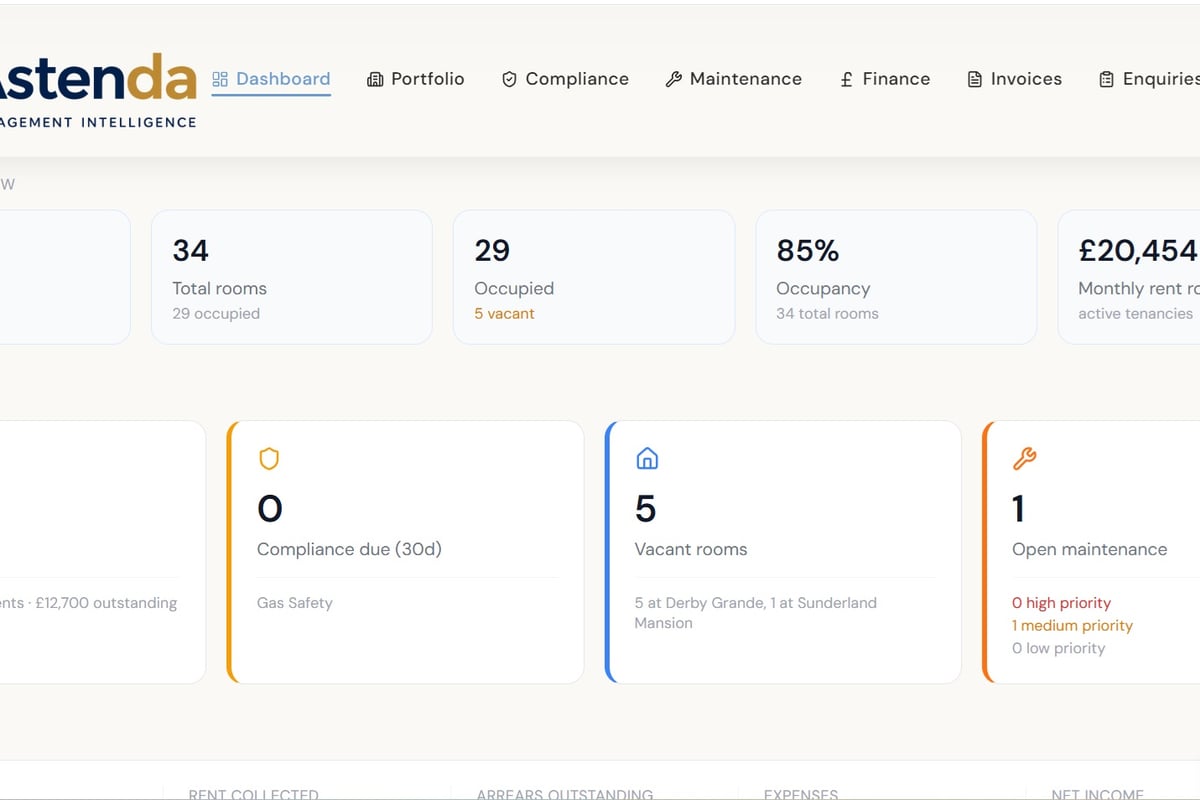
Managing deposit compliance across an HMO portfolio becomes significantly easier when you centralise your records and automate compliance tracking. Purpose-built landlord software can alert you when prescribed information deadlines are approaching, store proof of service, and keep all deposit documentation in one place.
Updating Prescribed Information During the Tenancy
Once you have served the initial deposit protection service prescribed information, you might wonder whether you need to issue updates if circumstances change during the tenancy. The law is not entirely clear on this point, but best practice and guidance from Shelter suggest updating tenants in certain situations.
When to consider re-serving prescribed information:
- The landlord or agent's contact details change
- You switch from one approved scheme to another
- You move from insured to custodial protection (or vice versa)
- The deposit amount increases (such as when rent increases and the deposit is topped up)
If the tenancy becomes periodic after an initial term, the original prescribed information generally remains valid – you do not need to re-serve it simply because the fixed term has ended. However, if the deposit itself changes in amount or protection method, fresh prescribed information is prudent.
Common Mistakes Landlords Make with Prescribed Information
Even experienced landlords sometimes stumble on the deposit protection service prescribed information requirements. Being aware of the most common errors helps you avoid them.
Mistake 1: Serving Incomplete Information
Using your own template or summary instead of the full prescribed information is a frequent problem. The statutory items are non-negotiable – you cannot paraphrase or pick and choose which details to include. Always use the template provided by your chosen deposit scheme or ensure your own document covers every item in the Prescribed Information Order.
Mistake 2: Missing the 30-Day Deadline
Landlords sometimes confuse the deadline for protecting the deposit (also 30 days) with the deadline for serving prescribed information. Both must be done within 30 days, but they are separate obligations. Protecting the deposit in time but serving the information on day 35 still constitutes a breach.
Mistake 3: Only Serving One Tenant in a Joint Tenancy
As discussed earlier, every tenant who contributed to the deposit must receive the prescribed information. Handing one copy to the "lead tenant" and assuming they will share it with their housemates does not satisfy your legal duty.
Mistake 4: Failing to Keep Proof
Serving the prescribed information is only half the battle – proving you did so is the other half. Without evidence of service (a signed receipt, postal tracking, email confirmation, or a signed tenancy agreement incorporating the prescribed information), you cannot demonstrate compliance if challenged.
Mistake 5: Assuming Email Alone Is Enough
While email is a valid method, simply sending the prescribed information to an email address does not guarantee the tenant received or read it. Best practice is to request a read receipt, follow up to confirm receipt, or use a tracked email system. Combining email with another method (such as handing over a printed copy at the start of the tenancy) provides belt-and-braces assurance.

Deposit Schemes and Prescribed Information Templates
Each of the three government-approved deposit protection schemes provides its own prescribed information templates and guidance. These resources are designed to make compliance straightforward, and using them ensures you include all the required details.
Deposit Protection Service (DPS)
The Deposit Protection Service offers both custodial and insured options. Their prescribed information templates are available through their online portal when you register a deposit. DPS also provides detailed guidance on completing each section and answering common questions about timing and service.
Tenancy Deposit Scheme (TDS)
TDS publishes comprehensive practice materials, including their code of recommended practice, which explains the prescribed information process in detail. Their templates are accessible to both landlords and agents, and they offer support if you are unsure how to complete any section.
mydeposits
mydeposits provides a step-by-step prescribed information guide that walks landlords through each required field, highlights common mistakes, and offers downloadable templates. Many landlords find this resource particularly helpful when managing deposits for the first time or when switching schemes.
All three schemes are equally valid in law, and the choice between them typically comes down to cost, service preferences, and whether you prefer custodial or insured protection. Whichever you choose, make full use of their prescribed information resources.
What Tenants Can Do If Prescribed Information Is Not Provided
Understanding the tenant's perspective on deposit protection service prescribed information helps landlords appreciate why compliance matters. Citizens Advice and other tenant support organisations actively encourage tenants to check their deposit has been protected and that they have received the prescribed information.
If a tenant discovers their landlord has not served prescribed information (or served it late or incompletely), they have several options:
- Request the information – The tenant can ask the landlord or agent to provide the missing details immediately
- Check protection status – Each scheme offers an online checker where tenants can verify whether their deposit is registered
- Seek advice – Organisations like Shelter and Citizens Advice help tenants understand their rights and next steps
- Apply to court – The tenant can make a county court application for an order compelling the landlord to protect the deposit, serve the information, and pay the statutory penalty
Most disputes can be resolved without court action if landlords respond promptly and correct any compliance failures. However, the longer non-compliance continues, the more likely tenants are to pursue formal remedies.
Integrating Prescribed Information into Your Landlord Workflow
For HMO landlords managing multiple properties and frequent tenant turnover, making deposit protection service prescribed information part of your standard tenancy setup routine is essential. Manual tracking quickly becomes unmanageable as your portfolio grows.
Build a Compliance Checklist
Create a step-by-step onboarding process that includes deposit protection and prescribed information as mandatory tasks. A simple checklist might look like this:
- Receive deposit payment and note the date
- Protect deposit with chosen scheme within 30 days
- Complete prescribed information template from scheme
- Serve prescribed information to all tenants within 30 days
- Obtain and file proof of service (signature, receipt, or email confirmation)
- Record protection certificate number and service date in property records
Use Software to Track Deadlines
Landlord management software can automate reminders for deposit protection deadlines, store prescribed information documents, and flag upcoming compliance dates. For landlords juggling HMO tenancies with staggered move-in dates and multiple deposits, this kind of centralised system prevents costly oversights.
The same software that helps you track property certificates and compliance deadlines can also manage deposit protection records, ensuring everything is documented and accessible when you need it.
Standardise Your Documentation
Rather than creating bespoke prescribed information for each tenancy, use the scheme templates consistently and store completed copies in a standardised filing system (digital or physical). This makes it easy to retrieve documents if a tenant requests a copy or if you need to prove service later.
Practical Scenarios: Prescribed Information in Action
Real-world examples illustrate how the deposit protection service prescribed information rules work in practice and where landlords sometimes encounter difficulties.
Scenario 1: Mid-tenancy landlord change
You purchase a property with sitting tenants. The previous landlord protected the deposit but did not serve prescribed information. The tenants are now your responsibility. You must immediately serve compliant prescribed information showing yourself as the new landlord. If you do not, the clock is still ticking from the original deposit receipt, and you inherit the compliance failure.
Scenario 2: Deposit top-up
A tenant's rent increases mid-tenancy, and you request a deposit top-up to maintain the equivalent of five weeks' rent. When the tenant pays the additional amount, you must protect that increase within 30 days and serve fresh prescribed information reflecting the new total deposit amount.
Scenario 3: HMO room changeover
One tenant leaves an HMO with individual tenancies, and a replacement tenant moves in and pays a deposit for their room. This is a new deposit and a new 30-day obligation. The prescribed information for other tenants in the property is unaffected, but the new tenant must receive theirs on time.
Scenario 4: Agent to self-management switch
You previously used a letting agent who handled deposit protection and prescribed information. You now manage the property yourself. Ensure you have copies of all deposit protection certificates and prescribed information records from your agent. If the agent failed to comply, you are now responsible for rectifying it.
Deposit Protection Across the UK: Regional Variations
While this article focuses on England and Wales, it is worth noting that deposit protection rules differ across the UK's devolved nations. Scotland has its own tenancy deposit schemes and prescribed information requirements under separate legislation. Northern Ireland has recently updated its deposit protection regime, introducing new prescribed information requirements that differ in detail from those in England and Wales.
If you manage properties across borders (for example, HMOs in both England and Scotland), be aware that you must comply with the specific rules in each jurisdiction. The principles are similar, but the details, deadlines, and approved schemes vary.
For landlords in England and Wales, the 2007 Prescribed Information Order remains the definitive legal source, and the three approved schemes (DPS, TDS, mydeposits) are the only options for protecting deposits.
Record-Keeping and Audit Trails
Maintaining thorough records of when and how you served deposit protection service prescribed information is not just good practice – it is your defence if compliance is ever questioned. Courts, tenants, and enforcement authorities will ask for evidence, and "I'm sure I sent it" is not a sufficient answer.
Essential records to keep:
- Copy of the completed prescribed information document for each tenancy
- Evidence of service (signed receipt, postal tracking, email with delivery confirmation)
- Deposit protection certificate from your chosen scheme
- Date the deposit was received and date it was protected
- Dates prescribed information was served to each tenant
Store these records for at least six years after the tenancy ends. Deposit disputes can sometimes arise long after a tenancy has concluded, and you may need to prove compliance retrospectively.
Many landlords maintain both physical and digital copies for redundancy. Cloud-based landlord software offers the advantage of automatic backups, version control, and easy retrieval when you need to demonstrate compliance to a court, a tenant, or during routine rental maintenance reviews.
Staying Compliant as Regulations Evolve
Deposit protection law has remained relatively stable since its introduction in 2007, but landlord-tenant legislation is always subject to change. Staying informed about updates to prescribed information requirements, deposit protection rules, and broader tenancy law helps you maintain compliance over the long term.
Government consultations occasionally propose changes to deposit rules, such as capping deposit amounts or adjusting prescribed information requirements. While no major reforms to the deposit protection service prescribed information framework are currently in force for 2026, landlords should monitor updates from official sources and their chosen deposit scheme.
Your deposit protection scheme will notify you of any changes that affect prescribed information content or timing. Engage with these updates promptly – failing to adapt to new requirements can expose you to the same penalties as ignoring the original rules.
Getting deposit protection service prescribed information right protects both you and your tenants, ensuring transparency and fairness throughout the tenancy. By understanding what must be included, when to serve it, and how to prove compliance, HMO landlords can avoid penalties and maintain smooth tenant relationships. Managing these obligations across multiple properties and tenancies is much easier with the right systems in place. Astenda helps landlords centralise compliance tracking, automate reminders for critical deadlines, and keep all deposit documentation organised and accessible whenever you need it.
Get a live view of your whole property portfolio.
Start your 30-day free trialGeneral information only. This is not legal, tax or financial advice. Rules change and vary by council, so check GOV.UK or take professional advice.