Section 21 Notice: What UK Landlords Need to Know in 2026
The section 21 notice has been a cornerstone of private residential tenancy law in England and Wales for decades, but that era has now ended. Under the Renters' Rights Act 2025, section 21 'no-fault' evictions were abolished on 1 May 2026, fundamentally changing how landlords regain possession of their properties. For HMO landlords and small portfolio owners, understanding what has changed, how transitional rules work, and what replaces the section 21 notice is essential for lawful, effective property management in 2026 and beyond.
What Was a Section 21 Notice?
A section 21 notice was a legal instrument that allowed landlords to end an assured shorthold tenancy (AST) without needing to prove any fault on the tenant's part. Often called a 'no-fault eviction', it gave landlords the right to recover possession at the end of a fixed term or during a periodic tenancy, provided they followed strict procedural requirements and gave the correct amount of notice.
Key characteristics of the old section 21 process included:
- No requirement to provide a reason for possession
- Strict form and timing requirements (Form 6A was commonly used)
- Mandatory deposit protection and prescribed information compliance
- Prohibition during the first four months of a tenancy
- Numerous technical pitfalls that could invalidate the notice
The section 21 notice was popular with landlords because it offered certainty and avoided potentially lengthy court proceedings to prove grounds for possession. However, it became controversial because tenants could be forced to leave even when they had done nothing wrong, paid rent on time, and wanted to remain.
Why Section 21 Was Abolished
The government concluded that section 21 notices undermined tenant security and discouraged renters from asserting their rights to repairs or challenging unfair treatment. Tenants living in fear of retaliatory eviction were less likely to report issues like damp, disrepair, or rental maintenance problems. The Renters' Rights Act 2025 therefore removed section 21 entirely and moved all tenancies to a periodic basis from the outset.
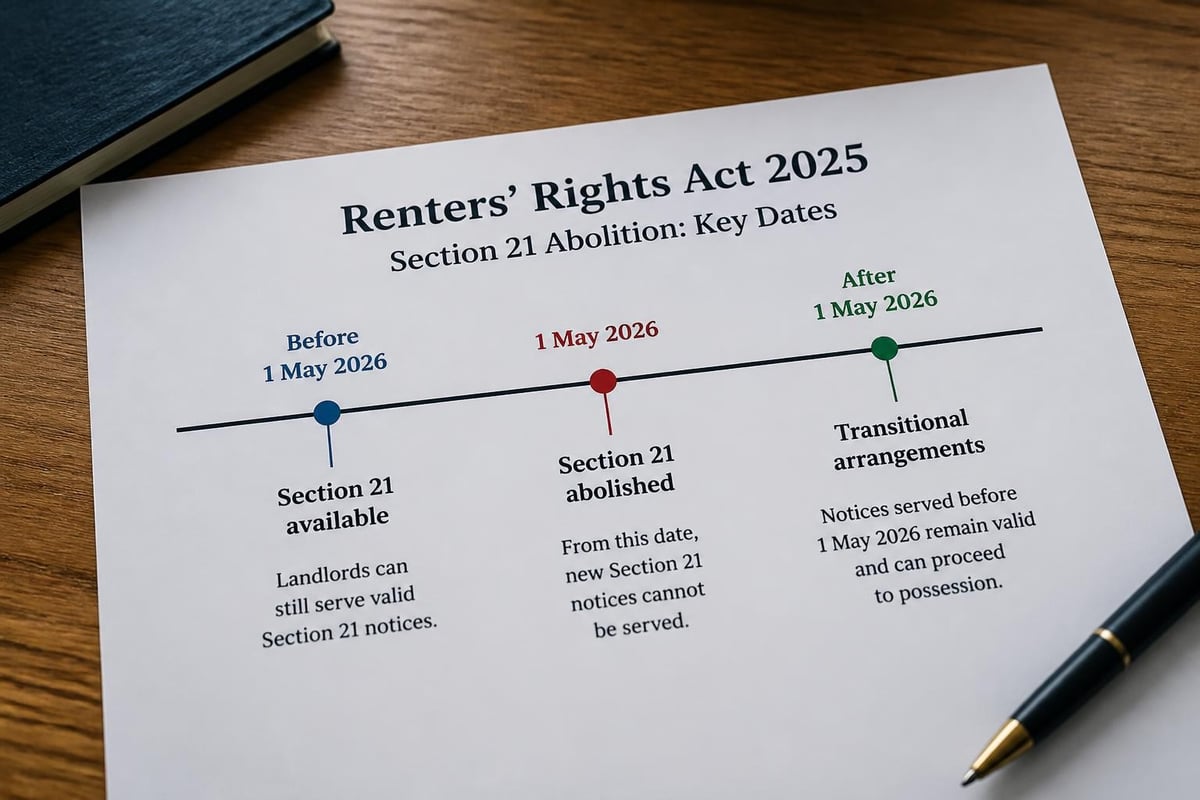
The Transition: What Happened on 1 May 2026
From 1 May 2026, landlords can no longer serve a section 21 notice on any tenancy. All new tenancies created from that date are periodic from day one, with no fixed term. This means landlords must now rely exclusively on grounds-based possession under section 8 of the Housing Act 1988 to regain their property.
Notices Served Before 1 May 2026
If you served a valid section 21 notice before 1 May 2026, transitional rules allow you to continue relying on it, subject to strict deadlines. The official guidance on notices served before 1 May 2026 sets out what you need to do:
| Notice type | Deadline to make court claim |
|---|---|
| Section 21 served before 1 May 2026 | Must apply to court before notice expires or by 31 October 2026, whichever is later |
| Section 8 served before 1 May 2026 | Standard rules apply; no special cut-off |
This transitional window is critical. If you served a section 21 notice in early 2026, you had until 31 October 2026 to make a possession claim, even if the notice period itself expired earlier. Missing this deadline means the notice lapses and you must start again using the new grounds-based system.
For many HMO landlords, this transitional period has already passed. By October 2026, any section 21 notice not acted upon is now void, and landlords must adapt to the new regime.
What Replaced Section 21?
Without the section 21 notice, landlords now recover possession exclusively through section 8 and its associated grounds. The Renters' Rights Act expanded and reformed these grounds to cover situations previously handled by section 21, including:
- Landlord moving in or selling: New mandatory grounds allow possession when the landlord (or close family) genuinely needs to occupy the property, or when the landlord intends to sell with vacant possession.
- Repeated rent arrears: Strengthened grounds for persistent arrears, even if arrears are cleared before the hearing.
- Student accommodation: Specific grounds for higher education institutions and recognised student landlords.
- Substantial redevelopment: Mandatory ground where the landlord intends major works that require vacant possession.
Importantly, these grounds require evidence and justification. Unlike a section 21 notice, you cannot simply decide you want the property back without a lawful reason. The court will examine whether the ground is genuinely made out and whether it is reasonable to grant possession.
Practical Implications for HMO Landlords
HMO landlords often managed tenancies with a mix of section 21 and section 8, using section 21 as a 'clean exit' at the end of a fixed term when they wanted to refurbish a room, change the tenant mix, or adjust rents between lettings. That flexibility has gone.
You now need to:
- Plan tenancies with the grounds for possession in mind from the outset
- Document breaches, arrears, and anti-social behaviour meticulously
- Ensure compliance with all statutory obligations (deposit protection, licensing, safety certificates) because non-compliance can block or delay possession claims
- Communicate clearly and professionally with tenants to resolve issues before they escalate to court
For example, if you plan to sell a property or move a family member in, you must give the required notice under the new grounds and be prepared to prove your intention. If you want to evict a tenant for persistent late payment, you'll need a clear record of arrears and communications.

Common Pitfalls That Made Section 21 Notices Invalid
Even when the section 21 notice was available, many landlords inadvertently served invalid notices that were rejected by the courts. Understanding these pitfalls remains instructive because attention to procedural detail is even more critical under the new system.
Deposit Protection Failures
One of the most common reasons a section 21 notice failed was non-compliance with deposit protection rules. Landlords had to protect the deposit in an authorised scheme and provide prescribed information to the tenant within strict time limits. If you failed to do this, any section 21 notice was automatically invalid until you remedied the breach (and even then, you might not be able to serve section 21 at all).
Under the new regime, deposit protection remains mandatory, and non-compliance can still block possession claims. Ensuring your deposits are protected and documented from day one is non-negotiable.
Incorrect Form or Information
Section 21 notices had to use the correct prescribed form (Form 6A) and include accurate information about the tenancy, landlord, property, and notice period. Minor errors-wrong tenant name, incorrect address, miscalculated dates-could render the notice void. Shelter's guidance on invalid Section 21 notices lists dozens of technical traps.
Although the section 21 notice itself is now history, the lesson is clear: precision and compliance matter. Section 8 notices also have prescribed forms and strict requirements. A notice that misstates the ground, gets the property address wrong, or fails to give the correct notice period will be invalid and delay your possession claim by months.
Retaliatory Eviction
The Deregulation Act 2015 prohibited landlords from serving a section 21 notice within six months of a tenant making a legitimate complaint about disrepair or health and safety, or after the local authority served an improvement notice. Attempting a 'retaliatory eviction' made the notice invalid.
This principle continues. If you try to evict a tenant using grounds for possession shortly after they complained about a serious issue, the court may find the claim retaliatory and refuse possession. Keep relationships professional, address maintenance issues promptly, and document your reasons for seeking possession clearly.
Understanding Tenancy Types in 2026
The Renters' Rights Act abolished fixed-term assured shorthold tenancies. Every new residential tenancy created from 1 May 2026 is periodic from the start, rolling week-to-week or month-to-month depending on how rent is paid.
What this means in practice:
- No more six-month or twelve-month fixed terms
- Tenants can give notice and leave without penalty (subject to the notice period)
- Landlords cannot use the end of a fixed term as a trigger for possession
- Rent increases and other terms are governed by statute and the tenancy agreement, not the expiry of a fixed term
For HMO landlords who traditionally relied on fixed terms to manage turnover and align tenancy dates, this is a significant shift. You'll need to build flexibility into your rent collection processes and accept that tenants may leave or stay on a more fluid basis.
Existing Fixed-Term Tenancies
If a tenant signed a fixed-term AST before 1 May 2026, that term continues until its contractual end date. At that point, the tenancy automatically becomes periodic. You cannot renew it as a new fixed-term tenancy; the tenancy simply rolls on under the new periodic rules.
This creates a transitional period during which some tenancies remain fixed-term while others are already periodic. By late 2026, most landlords are managing a mix, and within a year or two, all tenancies will be periodic.
How to Regain Possession Under the New System
Without the section 21 notice, regaining possession now requires you to:
- Identify a valid ground for possession under section 8.
- Serve a compliant section 8 notice using the prescribed form, specifying the ground(s) and giving the required notice period.
- Make a possession claim to the court if the tenant does not leave voluntarily.
- Prove the ground(s) at a court hearing and demonstrate that it is reasonable to grant possession.
- Obtain a possession order and, if necessary, apply for a warrant of eviction.
Each ground has its own notice period, evidence requirements, and legal tests. Some grounds are mandatory (the court must grant possession if proved), while others are discretionary (the court considers whether it is reasonable).
Landlords should:
- Consult the National Residential Landlords Association guidance and other sector bodies for practical advice.
- Seek legal advice early when considering possession, especially for complex situations like anti-social behaviour or disputed arrears.
- Keep thorough records of tenancy communications, payments, breaches, and compliance (gas safety, EICRs, HMO licensing).
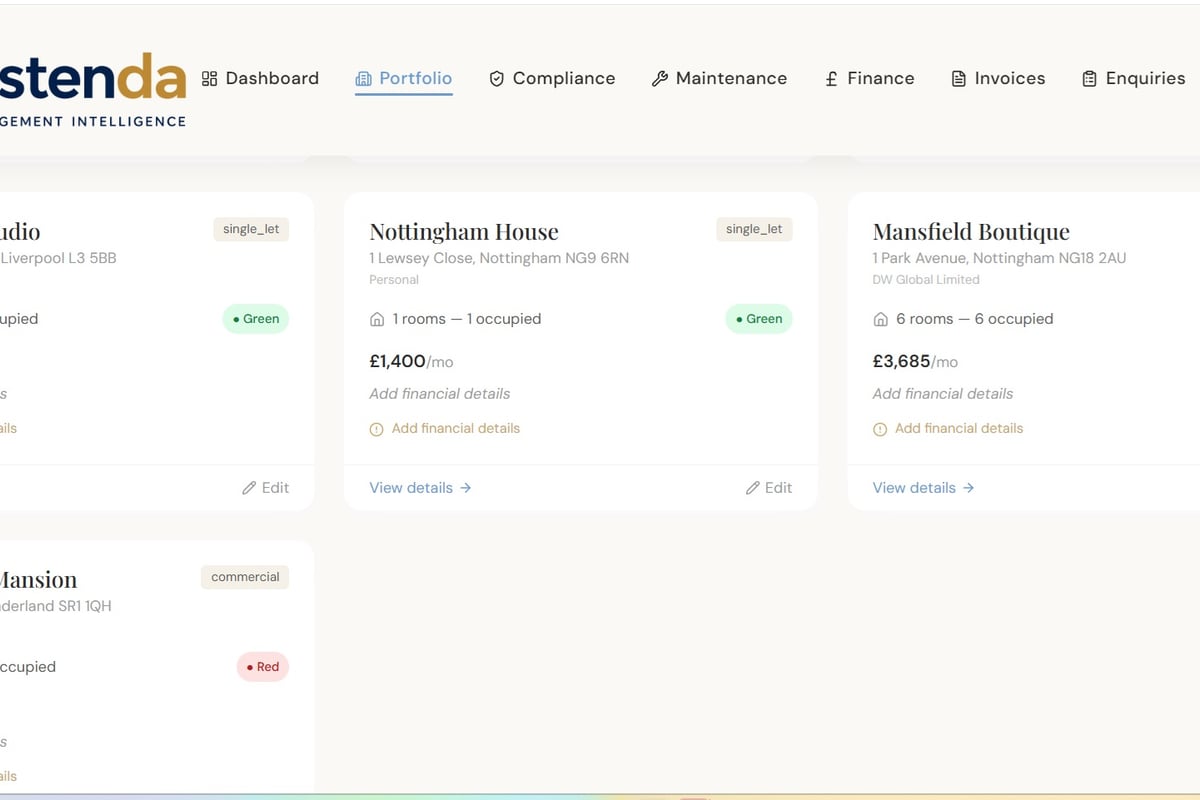
Astenda's landlord management software helps you track compliance deadlines, arrears, and communications in one place, so you have the documentation ready if you ever need to pursue possession. With automated alerts for certificate renewals and arrears tracking, you can stay on top of your legal obligations and respond quickly when issues arise.

Compliance and Certificates: More Important Than Ever
Because possession now depends on proving specific grounds and satisfying the court that you've met your obligations, staying compliant is more critical than ever. Courts have discretion to refuse possession or delay orders if a landlord has failed to meet statutory duties.
Key compliance areas for HMO landlords:
- Gas safety certificates: Annual checks and valid certificates are mandatory; failing to provide one can block possession and expose you to prosecution.
- Electrical installation condition reports (EICRs): Required every five years (or sooner if the report recommends); non-compliance can delay possession.
- Energy Performance Certificates (EPCs): Minimum energy efficiency standards apply; letting a property below the minimum can make a possession claim harder.
- HMO licensing: If your property requires a licence (either mandatory, additional, or selective), you must hold a valid one. Unlicensed operation can result in rent repayment orders and makes possession claims much harder to win.
- Smoke and carbon monoxide alarms: Statutory requirements apply; failure to install or test can lead to penalties and undermine your position in court.
Managing these obligations across an HMO portfolio can be complex, especially as different properties may have different renewal dates for certificates and compliance checks. A good property management system will alert you in advance, track expiry dates, and store certificates securely so you can produce evidence instantly if challenged.
Practical Steps for HMO Landlords in 2026
With the section 21 notice now abolished, here are practical steps to adapt your management approach:
Review Your Tenancy Agreements
Ensure your agreements reflect the new periodic structure and include clear terms on rent payment, notice periods, house rules, and tenant obligations. While you cannot contract out of statutory protections, a well-drafted agreement sets expectations and provides evidence if disputes arise.
Document Everything
Keep detailed records of:
- All communications with tenants (emails, texts, letters)
- Rent payments and arrears
- Maintenance requests and how they were resolved
- Inspections and property condition
- Compliance certificates and safety checks
This documentation is your evidence if you need to prove a ground for possession or defend your management practices.
Stay on Top of Compliance
Set up a system to track and renew certificates, licences, and safety checks well before they expire. Missing a renewal can lock you out of possession claims and expose you to enforcement action.
Build Good Tenant Relationships
Prevention is better than cure. Professional, responsive management reduces conflict and turnover. When tenants feel respected and issues are resolved promptly, they are less likely to fall into arrears or breach tenancy terms, and you're less likely to need possession at all.
Plan Ahead for Portfolio Changes
If you plan to sell, refurbish, or move into a property, understand which grounds for possession apply and how much notice you must give. Don't assume you can simply end a tenancy on demand; you need a lawful ground and proper process.
When to Seek Advice
Possession claims under the new regime can be legally complex, especially for discretionary grounds where the court balances landlord and tenant interests. You should consider professional advice when:
- A tenant disputes your possession claim or challenges the validity of your notice
- You're dealing with anti-social behaviour, illegal activity, or safeguarding concerns in an HMO
- You're unsure which ground for possession applies to your situation
- You've been served with a rent repayment order or prosecution notice
- You need to navigate overlapping issues like disrepair claims and possession
Citizens Advice and Shelter provide guidance for tenants facing possession, but landlords can also benefit from their resources to understand how tenants will respond and what objections might be raised. Being prepared and understanding both sides strengthens your case.
The Bigger Picture: Managing HMOs Without Section 21
For HMO landlords, the loss of the section 21 notice removes a convenient management tool, but it doesn't make professional letting impossible. Many landlords in other jurisdictions have always operated without no-fault evictions, and the key is to professionalise your approach:
- Tenant selection: Thorough referencing, right-to-rent checks, and affordability assessments reduce the risk of problem tenancies.
- Clear communication: Set expectations, explain house rules, and respond to issues quickly.
- Proactive maintenance: Address repairs and safety concerns before they escalate into formal complaints or disrepair claims.
- Financial management: Monitor rent payments closely, intervene early on arrears, and use clear, consistent processes.
- Compliance tracking: Stay ahead of licence renewals, certificate deadlines, and regulatory changes.
Landlords who already operate this way will find the transition manageable. Those who relied heavily on section 21 to 'reset' tenancies or avoid dealing with difficult tenants will need to raise their game.
Looking Ahead: The New Normal
By late 2026, the section 21 notice is firmly in the past. The Renters' Rights Act has come into force, and landlords and tenants are adjusting to the new landscape of periodic tenancies and grounds-based possession.
For HMO landlords, this means:
- More emphasis on compliance, documentation, and professional management
- Greater scrutiny of landlord behaviour by courts and regulators
- A need for robust systems to track tenancies, payments, compliance, and communications
- Potential benefits in the form of longer, more stable tenancies and reduced turnover costs
- Ongoing need to stay informed about case law, regulatory updates, and best practice
The sector is evolving, and landlords who invest in good systems, stay compliant, and treat tenants fairly will continue to succeed. Those who resist change or cut corners will find the new regime far less forgiving than the old section 21 process.
The abolition of the section 21 notice marks a fundamental shift in how private landlords regain possession, requiring a move to grounds-based claims and closer attention to compliance and tenant relations. For HMO landlords and small portfolio owners, staying on top of compliance deadlines, arrears, and documentation is now more important than ever. Astenda's property management software helps you manage certificates, track rent payments, and maintain the records you need to operate confidently under the new regime. Discover how Astenda can simplify compliance and give you clarity across your portfolio.
Get a live view of your whole property portfolio.
Start your 30-day free trialGeneral information only. This is not legal, tax or financial advice. Rules change and vary by council, so check GOV.UK or take professional advice.