Section 8 Notice: A UK Landlord's Complete Guide (2026)
A section 8 notice is one of the most important legal tools available to private landlords in England and Wales who need to regain possession of their property when tenants have breached their tenancy agreement. Unlike the now-abolished Section 21 no-fault eviction route, a section 8 notice requires landlords to demonstrate specific grounds for possession, making it essential to understand the process thoroughly. For HMO landlords managing multiple tenants across a portfolio, knowing when and how to serve a section 8 notice properly can mean the difference between a smooth resolution and costly legal mistakes.
What Is a Section 8 Notice
A section 8 notice is a formal legal document issued under Section 8 of the Housing Act 1988 that allows landlords to begin possession proceedings against tenants who have breached their tenancy agreement or where other specified grounds apply. The notice informs tenants that you intend to apply to the court for a possession order and sets out the legal grounds you're relying upon.
The section 8 notice system operates differently from the previous no-fault eviction process. You must have valid legal grounds to serve the notice, and these grounds fall into two categories: mandatory and discretionary.
Mandatory vs Discretionary Grounds
Understanding the distinction between mandatory and discretionary grounds is crucial when preparing a section 8 notice.
Mandatory grounds compel the court to grant possession if you prove the ground applies. The judge has no discretion to refuse the order if the evidence is clear. Common mandatory grounds include:
- Serious rent arrears (typically eight weeks or more)
- Property required for occupation by the landlord or family member (in certain circumstances)
- Mortgage lender seeking possession due to landlord's default
Discretionary grounds give the court flexibility to decide whether possession is reasonable. Even if you prove the ground exists, the judge may refuse the order if they consider it unreasonable to evict. These include:
- Persistent rent delays (even if current arrears are cleared)
- Breach of tenancy obligations
- Antisocial behaviour
- Deterioration of property condition
- Domestic violence conviction

For HMO landlords, the distinction matters enormously. You might successfully prove antisocial behaviour (a discretionary ground), but the court could still refuse possession if the tenant has taken steps to remedy the situation or eviction would cause disproportionate hardship.
Common Grounds for Serving a Section 8 Notice
Most HMO landlords serve a section 8 notice based on rent arrears or tenancy breaches. Understanding which ground applies to your situation ensures you complete the notice correctly.
Rent Arrears
Rent arrears represent the most common reason landlords issue a section 8 notice. The grounds relating to arrears include:
| Ground | Arrears Required | Type | Key Features |
|---|---|---|---|
| Ground 8 | Significant arrears at notice and hearing | Mandatory | Most powerful - court must grant possession |
| Ground 10 | Some arrears at notice date | Discretionary | Court weighs reasonableness |
| Ground 11 | Persistent delay (even if paid) | Discretionary | Pattern of late payment matters |
For HMO landlords dealing with multiple tenants in one property, tracking arrears accurately becomes vital. One tenant falling behind affects your ability to meet mortgage obligations and maintain the property for other residents.
Modern rent roll software helps landlords monitor payment patterns and identify persistent issues before they escalate to serious arrears requiring court action.
Breach of Tenancy Agreement
Beyond rent issues, tenants may breach other tenancy terms. Ground 12 covers breaches of tenancy obligations, whilst Ground 14 addresses antisocial behaviour and nuisance to neighbours.
For HMO properties, common breaches include:
- Unauthorised subletting or additional occupants
- Damage beyond normal wear and tear
- Using the property for illegal purposes
- Noise complaints and disturbance to other tenants
- Failure to allow access for safety inspections
When managing HMOs, the actions of one tenant can severely impact others sharing the property. A section 8 notice based on breach of agreement gives you a route to address problems that threaten the wellbeing of your compliant tenants.
Other Valid Grounds
Several additional grounds may apply depending on your circumstances:
- Ground 7A: Conviction for serious offences in the property or locality
- Ground 7: Death of the tenant (when tenancy doesn't pass to another)
- Ground 13: Deterioration of condition due to tenant waste or neglect
The official government guidance on repossessing your property provides comprehensive details on all available grounds and when each applies.
How to Serve a Section 8 Notice Correctly
Serving a section 8 notice correctly is non-negotiable. Errors in the notice, insufficient notice periods, or improper service can invalidate the entire process, wasting time and legal fees.
Notice Period Requirements
The notice period you must give depends on the grounds you're relying upon. The government has updated notice periods, so always check current requirements before serving your notice.
Critical point: Never assume notice periods from previous years still apply. Recent legislative changes have altered many requirements, and serving insufficient notice makes your notice invalid.
Some grounds require shorter notice periods (particularly serious arrears or antisocial behaviour), whilst others demand longer periods. The guidance on possession notices from 1 May 2026 explains current requirements in detail.
What Must Be Included
Your section 8 notice must contain specific information to be valid:
- Landlord and tenant details: Full names and addresses
- Property address: The exact address of the tenancy
- Grounds for possession: Specific grounds you're relying on (by number and description)
- Evidence: Details supporting each ground
- Correct notice period: The earliest date proceedings can begin
- Prescribed information: All legally required statements and warnings
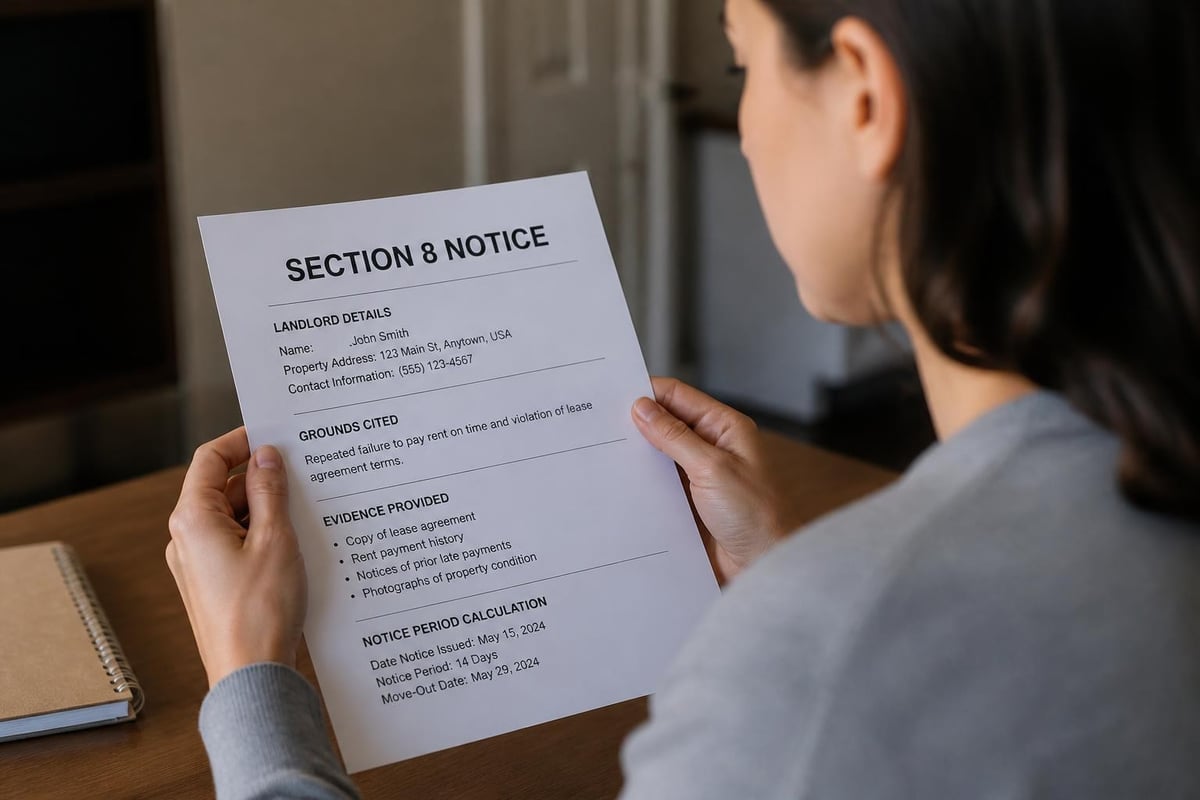
Missing any required element risks the court striking out your notice, forcing you to start again with a fresh notice and extended timescales.
Methods of Service
How you serve the section 8 notice affects whether it's legally valid. Acceptable methods include:
- Hand delivery: Personally giving the notice to the tenant
- First-class post: Posting to the tenant's address (the property)
- Leaving at the property: Placing it through the letterbox or in a conspicuous place
- Email: Only if the tenancy agreement specifically permits service by email
Always keep proof of service. For postal service, obtain proof of postage. For hand delivery, consider having a witness. Take photographs showing the notice being delivered or posted.
For HMO properties with multiple tenants, you may need to serve separate notices if only some tenants are in breach, or a joint notice if all tenants share responsibility for the breach.
The Court Process After Serving Notice
Serving the section 8 notice begins the possession process but doesn't immediately grant you possession. Understanding what follows helps you plan timescales and prepare properly.
Waiting Period and Court Application
After the notice period expires, you can apply to court for a possession order. You cannot apply before the notice period ends, even if the tenant has already vacated.
The court application requires:
- Completed possession claim forms
- Copy of the section 8 notice
- Copy of the tenancy agreement
- Evidence supporting your grounds (rent records, photographs, correspondence)
- Court fee
For rent arrears cases, detailed rent statements showing payment history and current arrears prove essential. For breach of agreement or antisocial behaviour, witness statements, photographs, and third-party reports (police, environmental health, neighbours) strengthen your case.
Court Hearing
At the hearing, the judge examines whether:
- The section 8 notice was valid and properly served
- The grounds you cited genuinely apply
- You've followed correct procedure
- (For discretionary grounds) Possession is reasonable
Mandatory grounds: The judge must grant possession if you prove the ground exists. No discretion exists to refuse.
Discretionary grounds: The judge weighs all circumstances. Even with proven grounds, they may:
- Adjourn the hearing to allow the tenant to remedy the breach
- Grant a suspended possession order (conditional on future behaviour)
- Refuse possession entirely if unreasonable
For HMO landlords, keeping meticulous records throughout the tenancy proves invaluable at this stage. Certificate property management systems that track compliance, inspections, and communications demonstrate professionalism and provide court-ready evidence.
Common Mistakes Landlords Make
Even experienced landlords make errors when serving a section 8 notice. Avoiding these pitfalls saves time, money, and stress.
Incorrect Notice Periods
Calculating notice periods incorrectly represents the single most common mistake. Recent changes to notice requirements catch many landlords out.
Always:
- Check current notice periods before serving notice (requirements change)
- Calculate from the date the tenant receives the notice, not when you send it
- Add extra days for postal service
- Verify weekend and bank holiday rules
Using an outdated template or relying on previous experience without checking current law frequently leads to invalid notices.
Missing or Incorrect Grounds
Citing the wrong grounds or failing to provide sufficient detail invalidates your notice. Each ground has specific requirements you must meet and evidence you must provide.
Common errors include:
- Citing multiple contradictory grounds
- Failing to specify which ground numbers apply
- Providing insufficient detail about the breach or arrears
- Relying on grounds that don't actually apply to your tenancy type
Citizens Advice provides guidance that helps tenants check whether notices are valid. Understanding what tenants are told helps you ensure your notice meets all requirements.
Serving Notice During Protected Periods
Certain circumstances may prevent you from serving notice or require extended notice periods. Missing these protections leads to invalid notices and potential discrimination claims.
Be particularly careful when:
- Tenants are exercising legal rights (requesting repairs, reporting hazards)
- Protected characteristics might be relevant
- Retaliatory eviction rules apply
Poor Record-Keeping
Insufficient evidence to support your grounds severely weakens your court case. The burden of proof rests on you as the landlord.
For rent arrears:
- Maintain detailed rent ledgers showing every payment and missed payment
- Keep copies of rent demand letters and arrears notices
- Document all communication about arrears
For breach of agreement:
- Photograph any damage or unauthorised changes
- Keep logs of incidents (noise complaints, antisocial behaviour)
- Obtain written statements from other tenants or neighbours
- Preserve email and text message evidence
Property management software designed for HMO landlords helps maintain these records automatically, ensuring you always have court-ready evidence when needed.
Section 8 Notice and HMO Management
Managing HMOs adds complexity to the section 8 notice process. Multiple tenants, communal areas, and additional licensing requirements all affect how you approach possession proceedings.
Individual vs Joint Tenancies
The tenancy structure affects how you serve a section 8 notice:
Individual tenancies: Each tenant has a separate agreement. You can serve a section 8 notice to individual tenants who breach whilst other tenants remain unaffected.
Joint tenancies: All tenants share one agreement. Serving a section 8 notice potentially ends the tenancy for all tenants, even if only one caused the problem.
For HMO landlords, individual tenancies offer more flexibility. When one tenant falls into arrears or breaches the agreement, you can take action against them specifically without disrupting compliant tenants.
Impact on Licensing
HMO licensing adds another dimension. Your local authority expects you to manage the property effectively and address antisocial behaviour or poor tenant conduct.
Key considerations:
- Licensing conditions may require you to take action against problematic tenants
- Failing to address serious breaches might put your licence at risk
- You must balance possession proceedings with your duty to provide stable housing
Document all steps you take to address issues before serving notice. This demonstrates to licensing authorities that you're managing the property responsibly.
Protecting Other Tenants
In an HMO, one tenant's behaviour directly affects others sharing the property. A section 8 notice based on antisocial behaviour or breach protects your compliant tenants' right to quiet enjoyment.
When one tenant's actions make the property unlivable for others:
- Document complaints from other tenants
- Issue warnings to the problem tenant
- Serve a section 8 notice if behaviour continues
- Keep other tenants informed (within data protection limits)
Your duty of care extends to all tenants. Taking appropriate action against those who breach demonstrates you're protecting the legitimate interests of responsible tenants.
Modern landlord management systems help you track these complex situations across multiple properties, ensuring nothing falls through the cracks when managing a portfolio of HMOs.
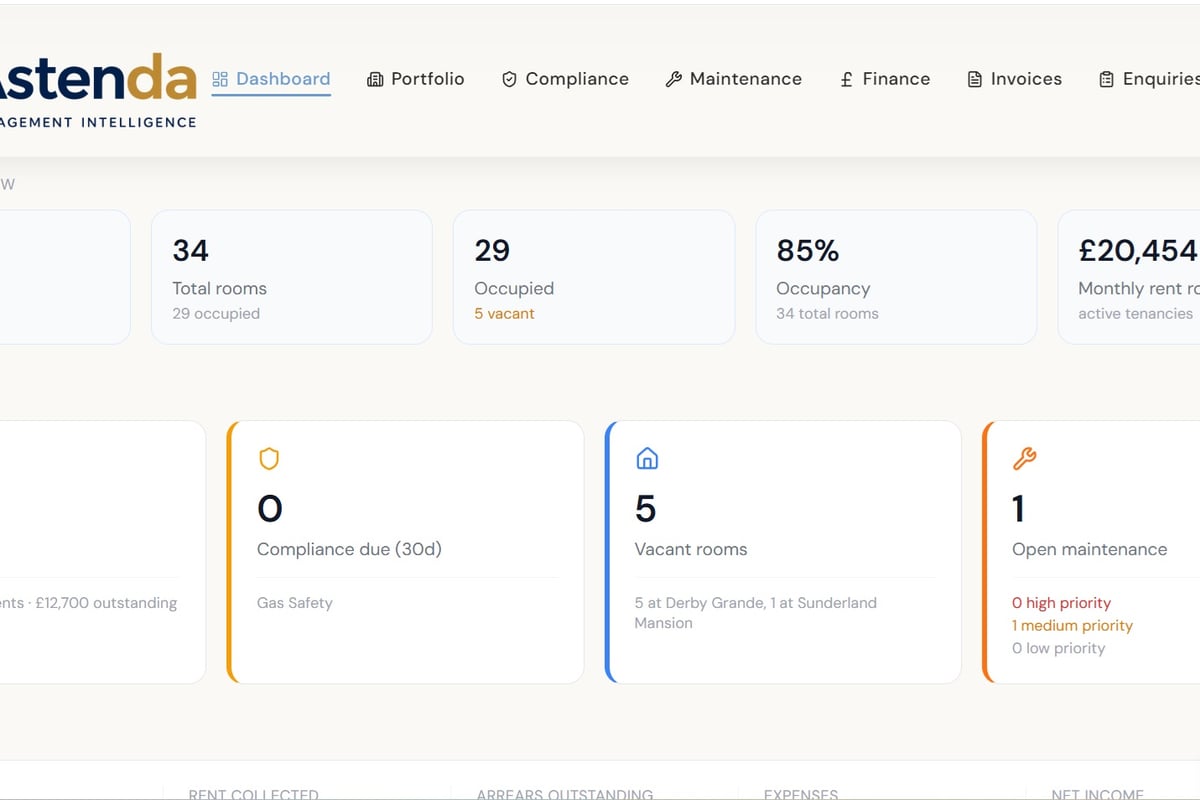
For landlords managing multiple HMO properties, staying on top of rent collection, compliance deadlines, and tenant issues becomes exponentially more complex. The Landlord Growth package provides comprehensive oversight of your entire portfolio, with automated alerts for arrears and approaching compliance renewals, helping you identify potential section 8 notice situations before they escalate.
Alternative Approaches Before Section 8
Serving a section 8 notice should rarely be your first step. Alternative approaches often resolve problems without court proceedings, saving time and maintaining better landlord-tenant relationships.
Early Intervention for Arrears
When rent payments fall behind, immediate communication often prevents escalation:
- Contact the tenant as soon as arrears appear
- Understand the reason for non-payment
- Offer payment plans for temporary financial difficulties
- Direct tenants to benefits advice if appropriate
- Document all agreements in writing
Many tenants experiencing temporary hardship will engage positively if approached constructively. Court proceedings become necessary only when communication breaks down or tenants refuse to cooperate.
Mediation for Disputes
For conflicts over property condition, noise, or other tenancy terms, mediation offers a middle ground:
- Independent mediators facilitate discussion
- Both parties propose solutions
- Agreements are documented formally
- Costs are typically lower than court proceedings
Mediation works particularly well for HMO situations where multiple tenants must coexist. Resolving disputes through mediation preserves relationships and avoids the adversarial court process.
Warning Letters and Improvement Notices
Before serving a section 8 notice for breach of agreement:
- Issue a formal warning: Clearly state the breach and required remedy
- Set a reasonable deadline: Give the tenant time to correct the problem
- Document everything: Keep copies of all correspondence
- Follow up: Check whether the tenant has complied
Courts view favourably landlords who've attempted resolution before resorting to possession proceedings. Demonstrating you've tried reasonable alternatives strengthens discretionary ground cases.
Record-Keeping and Documentation
Thorough documentation makes the difference between successful and unsuccessful possession proceedings. From the moment you identify a potential problem, start building your evidence file.
What to Record
Create a comprehensive record including:
| Category | What to Document | Why It Matters |
|---|---|---|
| Rent payments | Every payment, method, date, amount | Proves arrears pattern and amount |
| Communications | Letters, emails, texts, call logs | Shows you attempted resolution |
| Inspections | Photos, condition reports, dates | Evidence of damage or unauthorised changes |
| Incidents | Dates, times, witnesses, police reports | Supports antisocial behaviour claims |
| Repairs | Requests, responses, completion | Demonstrates you fulfilled obligations |
Digital vs Paper Records
Modern landlords increasingly rely on digital record-keeping:
Advantages:
- Easy to search and retrieve
- Automatic backups prevent loss
- Can be shared with solicitors instantly
- Timestamped entries prove authenticity
- Integration with accounting and compliance tracking
Best practices:
- Use cloud-based systems with robust security
- Regular backups to multiple locations
- Organised folder structures by property and tenant
- Password protection for sensitive information
For landlords managing multiple HMOs, digital systems that centralise tenant communications, rental maintenance records, and payment history prove invaluable when building a section 8 case.
Timeline Documentation
Create a chronological timeline of events leading to the section 8 notice:
- First missed payment or breach incident
- Initial contact with tenant
- Subsequent breaches or missed payments
- Warnings issued
- Tenant responses (or lack thereof)
- Final decision to serve notice
This timeline helps you prepare witness statements and ensures you can explain clearly to the court why possession became necessary.

Professional Support and Legal Advice
Whilst many landlords successfully navigate the section 8 notice process independently, knowing when to seek professional help prevents costly mistakes.
When to Consult a Solicitor
Consider professional legal advice when:
- The case involves complex legal questions
- Substantial arrears or property damage requires possession urgently
- The tenant disputes your grounds or raises counterclaims
- You're unfamiliar with recent legislative changes
- Multiple grounds apply simultaneously
- The property has unique circumstances (listed building, special tenancy type)
For HMO landlords, licensing implications may justify professional advice even in seemingly straightforward cases. A solicitor specialising in housing law understands how possession proceedings interact with HMO licensing requirements.
Understanding Legal Costs
Budget for potential legal expenses:
- Court fees: Application and hearing fees
- Solicitor fees: If you instruct representation
- Bailiff costs: If enforcement becomes necessary
- Lost rent: During proceedings period
Whilst costs seem daunting, they must be weighed against continuing losses from non-paying tenants or the risk of other tenants leaving due to antisocial behaviour.
Cost-saving tips:
- Handle straightforward arrears cases yourself
- Use solicitor consultations for document review only
- Join landlord associations offering legal helplines
- Attend court hearings personally rather than paying representation
Resources and Support Networks
Take advantage of available resources:
- Shelter's professional resources offer detailed legal guidance
- Landlord associations provide template documents and helplines
- Local authority landlord forums connect you with experienced peers
- Online landlord communities share practical experiences
For portfolio landlords, contact specialists who understand the unique challenges of managing multiple HMO properties and can provide tailored advice.
Maintaining Compliance Whilst Pursuing Possession
Even whilst serving a section 8 notice and pursuing possession, you remain bound by all landlord obligations. Failure to maintain compliance can undermine your possession case or trigger separate legal issues.
Continuing Safety Responsibilities
Your safety obligations continue unchanged:
- Annual gas safety certificates remain mandatory
- Electrical safety inspections must proceed as scheduled
- Smoke and carbon monoxide alarms must be maintained
- HMO licensing conditions still apply in full
If a tenant refuses access for safety inspections, document every refusal carefully. This may constitute grounds for possession itself but never justifies ignoring your legal duties.
Deposit Protection Rules
The tenant's deposit must remain properly protected throughout possession proceedings. Never:
- Deduct from the deposit before obtaining a court order
- Fail to protect the deposit correctly
- Miss prescribed information requirements
Deposit protection failures give tenants powerful defences against possession claims and can result in significant penalties. The deposit protection service prescribed information requirements remain critical even when you're pursuing eviction.
Insurance Considerations
Inform your landlord insurance provider about possession proceedings. Some policies require notification, and coverage may be affected if you don't disclose ongoing legal action.
Review your multiple property landlord insurance to ensure it includes legal expenses cover for possession proceedings. This coverage can offset substantial legal costs.
Post-Notice Period Management
After serving a section 8 notice, the period before court proceedings requires careful management.
Tenant Communication
Maintain professional communication:
- Respond to tenant queries about the notice
- Continue normal landlord-tenant communication about property matters
- Document all interactions
- Avoid harassment or pressure tactics
Never cut off utilities, change locks, or take any action that could constitute illegal eviction. These actions are criminal offences regardless of the tenant's breach.
Accepting Rent After Service
A common question: should you accept rent after serving a section 8 notice?
Generally yes, particularly for arrears cases:
- Accepting payment doesn't invalidate the notice
- It reduces the arrears you're claiming
- Courts view positively landlords who accept tenant attempts to remedy
However, be cautious accepting rent too far into the future, as this might suggest you've granted a new tenancy period.
Rent Arrears Accumulation
If pursuing possession for rent arrears, continue tracking the accumulating debt:
- Update rent statements weekly
- Include all arrears in your court application
- Document any partial payments received
- Calculate interest if your tenancy agreement permits
For mandatory possession grounds based on arrears, maintaining arrears above the threshold through to the court hearing is essential.
Property Condition Monitoring
Continue regular property inspections (with appropriate notice):
- Document any further deterioration
- Photograph any new damage
- Address urgent repairs affecting other tenants (in HMOs)
- Keep other tenants safe and the property habitable
These inspections provide updated evidence for court and demonstrate you're maintaining the property responsibly whilst pursuing possession.
Understanding how to properly serve a section 8 notice protects both your financial interests and legal position as an HMO landlord. With the abolition of Section 21 no-fault evictions, knowing the grounds, procedures, and documentation requirements for Section 8 possession has never been more important. Whether you're managing a single HMO or a portfolio of properties, maintaining detailed records, following correct procedures, and staying current with legislative changes ensures you can address tenant breaches effectively whilst remaining fully compliant with your legal obligations. If you're looking for a comprehensive system to track rent payments, monitor compliance deadlines, and maintain the documentation needed for possession proceedings across multiple properties, Astenda was built by a landlord specifically to help HMO owners stay organised and compliant throughout every aspect of property management.
Get a live view of your whole property portfolio.
Start your 30-day free trialGeneral information only. This is not legal, tax or financial advice. Rules change and vary by council, so check GOV.UK or take professional advice.