HMO Licence Requirements: Complete Guide for UK Landlords
Understanding hmo licence requirements is essential for any landlord operating houses in multiple occupation in England and Wales. Whether you're letting a large shared house or managing a small portfolio of HMOs, knowing which licensing rules apply to your properties can mean the difference between smooth compliance and serious penalties. This guide walks you through the complete licensing landscape, from mandatory schemes that cover every council to local variations that can catch even experienced landlords off guard.
What Makes an HMO Require a Licence
The foundation of hmo licence requirements starts with understanding what qualifies as an HMO in the first place. Official GOV.UK guidance on renting out properties as HMOs sets out the core definitions, but the practical reality is that several different tests can trigger HMO status.
The Standard Test
A property meets the standard test when at least three tenants form more than one household and share toilet, bathroom or kitchen facilities. This is the most common route into HMO territory for landlords letting to young professionals or students.
Key characteristics include:
- Three or more tenants from separate households
- Shared amenities (kitchen, bathroom or WC)
- The property is their main or only residence
- Rent is paid individually or as separate households
The standard test catches most traditional house shares, but it's not the only definition you need to watch.
The Self-Contained Flat Test
Purpose-built flats can become HMOs under the self-contained flat test when they house three or more tenants forming more than one household. Even without shared kitchens or bathrooms within the flat itself, the property is classified as an HMO if it sits in a building that isn't entirely self-contained.
This test trips up landlords who convert houses into flats or let individual flats in converted buildings. The building's overall construction determines whether the flat-specific test applies, not just the flat's internal layout.
Section 257 HMOs and Converted Buildings
Buildings converted entirely into self-contained flats can be Section 257 HMOs when the conversion didn't meet 1991 Building Regulations standards and fewer than two-thirds of the flats are owner-occupied. This technical definition affects older conversions and requires careful assessment of building history and ownership patterns.

Mandatory HMO Licensing Requirements
Every local authority in England and Wales operates a mandatory licensing scheme, though many landlords don't realise this universal coverage exists. The mandatory scheme applies to HMOs of a certain size and occupancy, regardless of where in the country they sit.
When Mandatory Licensing Applies
Your property requires a mandatory HMO licence when it meets all these conditions:
- It's occupied by five or more people
- Those people form more than one household
- Toilet, bathroom or kitchen facilities are shared
- At least one tenant pays rent
The five-person threshold is the critical number. A four-person house share typically escapes mandatory licensing, but add one more tenant and the requirement kicks in immediately.
Storey Requirements and Recent Changes
Historically, mandatory licensing also required the property to be three or more storeys high. This restriction was removed in October 2018, dramatically expanding the number of properties caught by mandatory requirements. Any qualifying HMO now needs a licence, whether it's a bungalow, two-storey terraced house or multi-floor building.
The change caught many landlords unaware, particularly those operating smaller properties who had previously remained outside licensing requirements. If you've been letting the same HMO configuration since before 2018, it's worth double-checking your licensing position.
| Licensing Type | Coverage | Property Size | Key Trigger |
|---|---|---|---|
| Mandatory | All councils nationally | 5+ occupants, 2+ households | Universal since 2018 reforms |
| Additional | Council-designated zones only | Any HMO size | Varies by local authority |
| Selective | Council-designated areas | Any rental (not just HMO) | Area-based, any property type |
Additional and Selective Licensing Schemes
Beyond mandatory requirements, local authorities can introduce additional licensing for HMOs and selective licensing for all private rented properties in designated areas. These schemes layer extra hmo licence requirements on top of mandatory rules.
Additional HMO Licensing
Additional licensing targets HMOs that fall below the mandatory threshold. Councils designate specific areas or property types where all HMOs require licences, regardless of size or occupancy. A three-person house share might need an additional licence even though it escapes mandatory requirements.
Check with your local authority to identify whether additional schemes cover your properties. Shelter's guidance on Houses in Multiple Occupation provides helpful context on how these schemes work in practice, and the NRLA licensing toolkit offers practical steps for identifying applicable schemes in your area.
Selective Licensing Schemes
Selective licensing isn't HMO-specific but can apply to your properties nonetheless. Councils designate areas where all privately rented properties require licences, capturing HMOs and single-household lets alike. These schemes typically target areas with high levels of anti-social behaviour, poor property conditions or low housing demand.
Common selective licensing triggers include:
- Properties in designated improvement areas
- High concentrations of private rented accommodation
- Significant anti-social behaviour problems
- Poor property conditions across a neighbourhood
The CIEH guidance on licensing schemes explains the policy background and how environmental health professionals approach these designations. Landlords need to monitor their council's licensing register because selective schemes can be introduced or expanded with relatively short notice periods.

Meeting the Fit and Proper Person Test
All hmo licence requirements include assessment of whether the applicant is a "fit and proper person" to hold a licence. This test examines your track record, competence and business practices.
What Councils Assess
Local authorities look at multiple factors when determining fitness:
- Any unspent criminal convictions (especially housing-related offences)
- Previous breaches of housing law or licence conditions
- Evidence of discrimination in lettings
- History of unlawful eviction or harassment
- Management agent competence (if you use one)
The test isn't a simple pass/fail. Councils have discretion to weigh factors, consider mitigating circumstances and attach conditions to licences where concerns exist but aren't disqualifying.
Satisfactory Management Arrangements
Beyond personal fitness, you must demonstrate satisfactory management arrangements. This means showing the council you have systems and knowledge to manage the HMO properly, maintain safety standards and respond to tenant issues.
Evidence might include:
- Details of your management processes and record-keeping
- Proof of relevant landlord training or qualifications
- References from previous licensing authorities
- Copies of your standard tenancy agreements and house rules
- Evidence of insurance and financial stability
If you use a managing agent, they must also meet the fit and proper test. The agent's track record, qualifications and complaints history all come under scrutiny. Managing complex compliance across multiple properties becomes significantly easier with proper systems, which is where certificate property management tools prove invaluable for tracking renewal dates and expiry deadlines.
Property Standards and Maximum Occupancy
Every HMO licence sets out specific conditions your property must meet. These standards form the core of hmo licence requirements and vary based on property characteristics, but certain minimums apply nationally.
Minimum Room Sizes
Sleeping accommodation must meet minimum size requirements. Rooms used by one person over ten years old need at least 6.51 square metres of floor space. Rooms for two people require 10.22 square metres. Anything smaller cannot be let as sleeping accommodation under HMO licensing rules.
These sizes apply to actual usable floor space, not including built-in furniture, sloped ceilings below 1.5 metres or areas with restricted headroom. Measure carefully, as councils verify room sizes during inspections.
Amenity Provision Requirements
HMO licences specify minimum numbers of bathrooms, toilets and cooking facilities based on occupancy:
| Occupants | Bathrooms | Toilets | Kitchens |
|---|---|---|---|
| 1-4 people | 1 | 1 | 1 (adequate facilities) |
| 5 people | 1 | 2 | 1 (with specified equipment) |
| 6-10 people | 2 | 2 | 1 or 2 (depending on layout) |
| 11+ people | Calculated by formula | Calculated by formula | Multiple required |
Local authorities can impose stricter standards than national minimums. Always check your council's specific amenity standards before assuming national guidance covers your obligations.
Fire Safety and Means of Escape
Fire safety requirements sit at the heart of licensing conditions. Your HMO must have appropriate fire detection, emergency lighting, fire doors and escape routes based on the property's layout and risk profile.
The council's environmental health or fire safety team will assess the property and may require:
- Mains-wired, interlinked smoke and heat alarms
- Fire doors (usually FD30 standard) with self-closers
- Emergency escape lighting in common areas
- Fire blankets and extinguishers in kitchens
- Clear escape routes kept free of obstructions
High-rise or complex HMOs may need more extensive measures, including fire alarm panels, sprinklers or additional protected escape routes. Professional fire risk assessments help identify necessary measures before you apply for a licence.
The Application Process and Documentation
Applying for an HMO licence requires substantial paperwork and attention to detail. Understanding what councils need upfront saves time and prevents application delays.
Required Documents and Information
Standard application requirements include:
- Property address and council tax band
- Your details (name, address, contact information)
- Details of any managing agent or person in control
- Evidence of ownership or right to apply
- Proposed maximum occupancy and household numbers
- Floor plans showing room layouts and sizes
- Gas safety certificate (if gas is present)
- Electrical installation condition report (EICR)
- Energy Performance Certificate (EPC)
- Proof of suitable smoke and carbon monoxide alarms
- Evidence of furniture fire safety compliance
- Payment of application fees
Some councils require additional documents, such as insurance certificates, tenancy agreements or evidence of planning permission. Check your local authority's specific checklist before submitting.
Application Fees and Processing Times
Council fees vary significantly across England and Wales. Some authorities charge a few hundred pounds; others exceed a thousand for initial applications. Most councils operate two-tier fees: a non-refundable application fee paid upfront and a licence issue fee paid once the licence is granted.
Processing typically takes between eight and twelve weeks, though complex applications or properties requiring improvement works can extend far longer. Submit applications well before your current licence expires or, for newly acquired properties, before the first tenants move in.

Council Inspections and Compliance Checks
Most applications trigger a property inspection. Council officers visit to verify room sizes, check amenity provision, assess fire safety measures and identify any hazards under the Housing Health and Safety Rating System (HHSRS).
Inspectors look for evidence of good management alongside physical standards. Tidy common areas, proper waste facilities, clear signage and well-maintained records all contribute to positive impressions. The rental maintenance approach you take directly influences inspection outcomes, as officers assess both current condition and likely future standards.
Planning Permission and Use Class Considerations
Many landlords overlook that hmo licence requirements sit alongside planning obligations. You may need both planning permission and an HMO licence to operate legally.
When Planning Permission Is Needed
Properties housing between three and six unrelated people fall into Use Class C4 (houses in multiple occupation). Letting a former family home (Use Class C3) as a C4 HMO constitutes a material change of use requiring planning permission.
However, permitted development rights historically allowed this change without explicit permission in many areas. The critical question is whether your local authority has removed those rights through an Article 4 Direction.
Article 4 Directions and Local Restrictions
Article 4 Directions remove permitted development rights in designated areas, forcing landlords to apply for formal planning permission before converting C3 properties to C4 use. Leeds City Council's HMO planning guidance and Redbridge's Article 4 information provide local authority perspectives on how these restrictions operate in practice.
Check whether Article 4 Directions cover your property's location. Operating an HMO without required planning permission can lead to enforcement action, even if you hold a valid licence. The Planning Portal's change of use guidance explains the broader Use Class system and when applications are necessary.
Sui Generis Properties
HMOs housing seven or more people fall outside the standard Use Classes entirely, becoming "sui generis" properties. Any change to sui generis use requires planning permission, with no permitted development rights available.
Planning permission often proves harder to obtain for larger HMOs, particularly in areas where councils seek to limit HMO concentrations or protect family housing stock. Factor planning considerations into acquisition decisions for larger properties.
Licence Conditions and Ongoing Compliance
Once granted, your licence imposes ongoing obligations. Hmo licence requirements don't end at approval; they create continuing responsibilities throughout the licence term.
Standard Licence Conditions
All HMO licences include standard conditions covering:
- Maximum occupancy limits: Never exceed the number of people or households specified
- Amenity maintenance: Keep facilities in good working order and repair
- Gas and electrical safety: Maintain annual gas checks and keep electrical systems safe
- Fire safety equipment: Test alarms regularly and maintain all fire safety measures
- Waste management: Provide adequate facilities and ensure proper disposal
- Tenant information: Display the licence and gas safety certificate prominently
Breaking any condition can trigger enforcement action, including civil penalties or licence revocation. Maintain comprehensive records demonstrating compliance with every condition.
Additional Conditions and Property-Specific Requirements
Councils often attach additional conditions addressing property-specific issues or local priorities:
- Restrictions on certain rooms being used for sleeping
- Requirements for additional bathrooms or kitchen facilities
- Specific fire safety upgrades with completion deadlines
- Mandatory landlord training or membership of accreditation schemes
- Enhanced management arrangements or inspection protocols
Challenge disproportionate conditions during the application process, but once the licence is granted, compliance becomes mandatory. Budget for required works before accepting a licence with expensive upgrade conditions.
Effective landlords build systems to track compliance deadlines across their portfolio. Software designed for HMO management helps ensure safety certificates, licence renewals and inspection dates don't slip through the cracks.
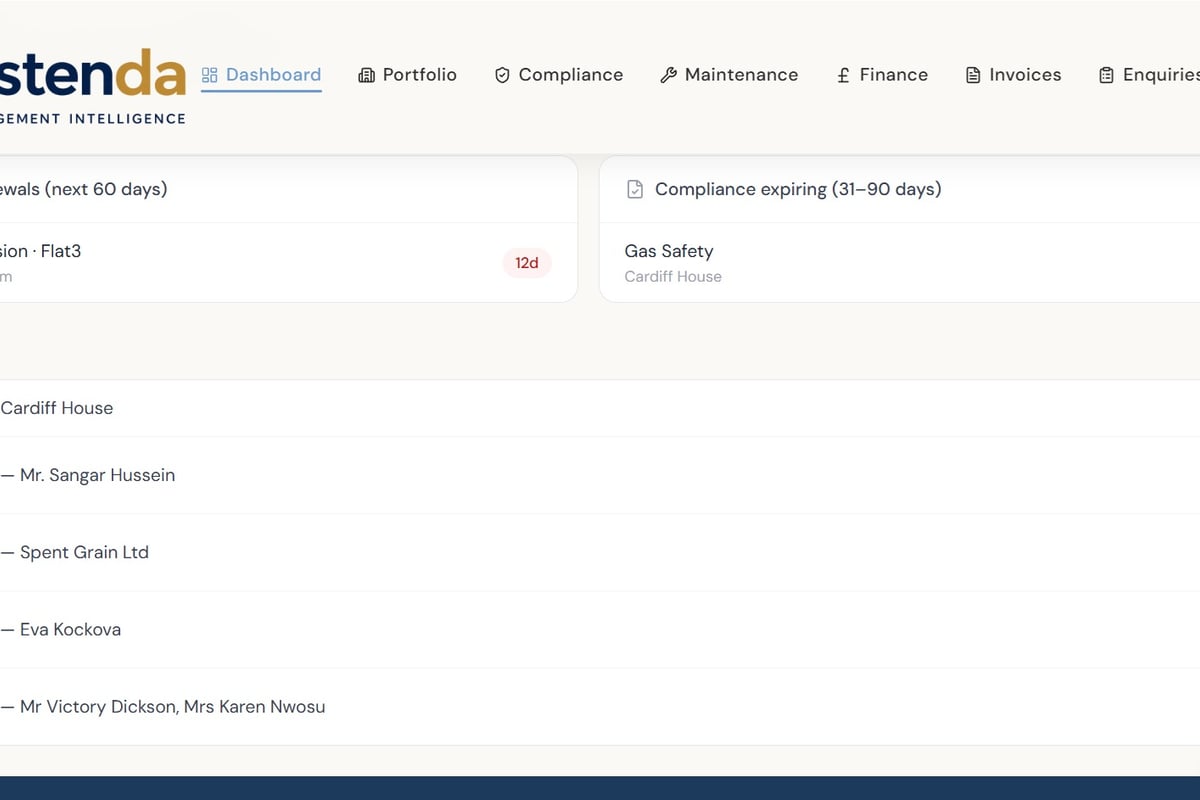
The Landlord Growth package helps landlords with up to ten properties track all compliance certificates, licence expiry dates and safety checks in one place. Alerts warn when renewals approach, and centralised document storage keeps inspection evidence instantly accessible for council visits or tenant requests.
Variation and Renewal Applications
Licences typically last five years, though councils can issue shorter terms in certain circumstances. Apply for renewal at least three months before expiry to maintain continuous coverage. Operating without a valid licence, even during an application period if the previous licence has expired, constitutes an offence.
If you need to change the licensed occupancy, layout or management arrangements mid-term, apply for a licence variation. Material changes without prior council approval breach your licence conditions.
Penalties for Non-Compliance
The consequences of ignoring hmo licence requirements are severe and extend beyond immediate financial penalties.
Civil Penalties and Rent Repayment Orders
Councils can impose civil penalties for licensing breaches and housing offences. Operating an unlicensed HMO, breaching licence conditions or failing to comply with improvement notices all trigger potential penalties.
Tenants in unlicensed HMOs can apply for Rent Repayment Orders (RROs), reclaiming up to twelve months' rent directly from the landlord. These orders represent substantial financial exposure, particularly for higher-value properties or long periods of non-compliance.
Criminal Prosecution Options
In serious cases, councils may pursue criminal prosecution instead of or alongside civil penalties. Convictions create a criminal record affecting future licence applications, mortgage availability and personal reputation.
Licence Revocation and Interim Management Orders
Persistent breaches can lead to licence revocation. When a licence is revoked or refused, the council may impose an Interim Management Order (IMO), taking control of the property's management and rent collection. IMOs remove your management rights while leaving you with ownership obligations and costs-the worst of both worlds.
Impact on Mortgage and Insurance
Operating without required licences typically breaches mortgage terms and invalidates landlord insurance. Lenders can demand immediate repayment if licensing breaches come to light, whilst insurers may refuse claims arising from unlicensed periods.
Review your mortgage offer and insurance policy to understand licensing-related terms. Some HMO mortgage lenders explicitly require borrowers to maintain all necessary licences as a condition of the loan.
Record-Keeping and Management Systems
Demonstrating compliance with hmo licence requirements demands robust record-keeping. Councils expect landlords to produce evidence of gas safety checks, electrical inspections, fire alarm tests, tenant information provision and other obligations at short notice.
Essential Records to Maintain
Create and keep accessible:
- All safety certificates (gas, electrical, fire equipment, PAT testing)
- Tenancy agreements and tenant identification documents
- Licence application documents and granted licences
- Inspection reports and correspondence with the council
- Records of repairs, maintenance and improvement works
- Fire alarm test logs and emergency lighting checks
- Waste collection arrangements and contracts
- Evidence of deposit protection and prescribed information
Digital storage with automated alerts for renewal dates prevents oversights. Many landlords find that managing complex compliance manually across multiple properties quickly becomes overwhelming.
Compliance Calendars and Automated Alerts
Building a compliance calendar tracking every certificate expiry, licence renewal deadline and inspection date across your portfolio is essential but time-consuming. Spreadsheets work for single properties but scale poorly as portfolios grow.
Purpose-built systems offer automated alerts, centralised document storage and audit trails proving when you took compliance actions. These capabilities become particularly valuable during council inspections or when defending against enforcement actions.
For landlords juggling multiple HMOs alongside other rental properties, integrated tools that track rent collection, arrears, compliance and tax reporting in one system dramatically reduce administrative burden. Understanding how rent roll software integrates with compliance tracking helps landlords build efficient management systems.
Working with Local Authority Licensing Teams
Positive relationships with council licensing teams make navigating hmo licence requirements significantly smoother. Environmental health officers and licensing managers hold substantial discretion in how they interpret standards and apply conditions.
Pre-Application Advice and Property Assessments
Most councils offer pre-application advice services. For a modest fee, officers visit your property before you apply, identifying potential issues and suggesting remedies. This investment prevents application refusals and reduces the likelihood of expensive condition requirements appearing after you've committed to the application fee.
Pre-application meetings also help clarify local interpretation of national standards. Room size calculations, amenity ratios and fire safety expectations vary between authorities. Understanding your council's specific approach prevents mismatches between your preparations and their requirements.
Responding to Improvement Notices and Schedules of Works
When inspections identify deficiencies, councils issue improvement notices or attach schedules of works to licences. These documents specify required remedies and compliance deadlines.
Respond promptly and constructively. If deadlines are unrealistic or requirements disproportionate, engage with the issuing officer to discuss alternatives. Most officers prefer collaborative solutions over enforcement action, but silence or non-compliance leaves them little choice.
Appeals and Review Processes
If your application is refused, a licence is revoked or you disagree with specific conditions, appeal rights exist through the First-tier Tribunal (Property Chamber). Appeals must be lodged within strict time limits following the council's decision.
Before appealing, attempt to resolve disputes through discussion with the licensing team. Many disagreements stem from misunderstandings about property characteristics or proposed management arrangements that can be clarified without formal proceedings.
Multi-Property Portfolio Considerations
Landlords with several HMOs face multiplied complexity in managing hmo licence requirements. Each property may sit under different licensing schemes, have unique application deadlines and require separate compliance tracking.
Tracking Multiple Licence Types and Deadlines
A typical portfolio might include:
- Properties under mandatory licensing only
- HMOs in additional licensing zones
- Properties in selective licensing areas (requiring both HMO and selective licences)
- Properties approaching licence expiry at different dates
- New acquisitions requiring immediate applications
Maintaining oversight across all these variables without dedicated systems risks oversights. Missing a renewal deadline or failing to identify that an additional scheme now covers a previously unlicensed property creates exposure to enforcement and penalties.
Standardising Management Practices Across Properties
Consistent management practices across your portfolio simplify compliance and improve efficiency. Standard procedures for:
- Safety certificate scheduling and contractor management
- Tenant information provision and documentation
- Inspection preparation and record-keeping
- Council correspondence and application tracking
reduce the risk of property-specific oversights and ensure all HMOs meet or exceed required standards.
Portfolio-Level Compliance Reporting
Understanding your compliance position across all properties simultaneously-which certificates expire when, which licences need renewal, which properties have pending works-requires consolidated reporting. This overview capability helps prioritise actions, budget for upcoming requirements and demonstrate to mortgage lenders or insurers that you maintain professional management standards.
For landlords navigating Making Tax Digital requirements alongside licensing obligations, integrated systems that handle both compliance tracking and financial reporting reduce duplication and ensure nothing falls through administrative gaps.
Future Regulatory Developments
The HMO licensing landscape continues to evolve. Staying informed about emerging requirements helps landlords plan proactively rather than react to sudden changes.
Proposed Reforms and Consultation Areas
Recent policy discussions have explored:
- Extending mandatory licensing to smaller HMOs nationally
- Introducing national landlord registration schemes
- Strengthening enforcement powers and penalty levels
- Requiring professional qualifications or accreditation for HMO landlords
- Expanding councils' ability to designate additional and selective licensing areas
Whilst not all proposals become law, the trajectory points toward increased regulation, higher compliance standards and more comprehensive licensing coverage.
Keeping Current with Local Authority Changes
Local licensing schemes change more frequently than national rules. Councils regularly introduce new additional or selective licensing designations, expand existing schemes or modify licence conditions based on local priorities and evidence.
Monitor your local authority's website for consultations, designation proposals and scheme changes. Industry bodies like the NRLA provide alerts about significant developments, whilst local landlord forums often share early warnings about proposed schemes.
Building Flexibility into Compliance Systems
Given ongoing regulatory development, compliance systems should accommodate changing requirements without major overhauls. Flexible certificate tracking, adaptable compliance calendars and modular document storage ensure your processes adjust as standards evolve.
Landlords who built rigid manual systems around 2018's mandatory licensing expansion found themselves rebuilding everything when local schemes changed or new certificate types were introduced. Digital systems with configurable fields and customisable alerts adapt more readily to regulatory shifts.
Understanding and meeting hmo licence requirements protects your business, ensures tenant safety and maintains your professional reputation across your portfolio. The licensing landscape's complexity demands systematic approaches to compliance tracking, timely renewals and ongoing property standards.
Astenda provides purpose-built HMO management software that helps UK landlords track licences, schedule safety certificates, manage rent collection and maintain comprehensive compliance records across all their properties. Built by a landlord who understands the practical challenges of HMO management, Astenda keeps your portfolio compliant and your administration under control.
Get a live view of your whole property portfolio.
Start your 30-day free trialGeneral information only. This is not legal, tax or financial advice. Rules change and vary by council, so check GOV.UK or take professional advice.